Get Full Government Meeting Transcripts, Videos, & Alerts Forever!
Get email alerts on the Vaping topic
No spam. Unsubscribe anytime.
State public-health experts warn of youth vaping epidemic; committee to file interim study
Summary
Health officials and educators told the committee that youth vaping in Arkansas has surged, acute vaping-associated lung injuries are under investigation, and a combination of education, local control, taxes, flavor bans and restrictions on advertising are policy options; an interim study on vaping will be filed.
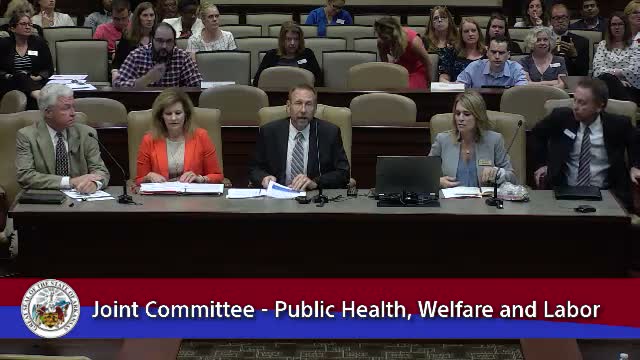
State health officials, educators and advocacy groups told the Senate Public Health, Welfare and Labor Committee that youth vaping has risen sharply in Arkansas and that recent national and state clusters of severe pulmonary injury linked to vaping justify legislative review of policy options.
Secretary of Health Nate Smith summarized CDC reporting and early Arkansas data: nationally there were roughly 450 cases in 33 states of severe pulmonary injury associated with vaping; Arkansas had six probable cases under investigation (ages 19–50, four of six male, five hospitalized). Secretary Smith said symptoms have included respiratory distress with abnormal chest imaging and gastrointestinal symptoms; no single product or compound has been consistently linked to all cases.
Debbie Jones, superintendent of Bentonville Schools, described the problem in schools as “epidemic,” telling lawmakers her district logged a roughly 420% increase in vape-related disciplinary incidents since 2016 and that the small, USB-like devices are easy to conceal in classrooms. School nurses in the district have been trained to carry and administer naloxone (Narcan) in at least one serious suspected exposure, she said.
Public-health witnesses recommended a range of policy tools that lawmakers could consider: raising the legal sales age to 21 (T21 is already scheduled to take effect in 2020), extending the Arkansas Clean Indoor Air Act to cover e-cigarettes and vaporizers, imposing higher excise or per-milliliter taxes on vaping products, restricting flavorings (many of which are approved for ingestion but not inhalation), and limiting point-of-sale placement and advertising near schools. Speakers cited examples from other states and municipalities that have banned flavored products or taxed products by volume.
Panelists and members also discussed enforcement challenges. Dr. Joe Thompson and others noted that about 80% of the national acute-injury cases reported THC or combined THC and nicotine use, much of it from noncommercial or illicit sources; at the same time, some hospitalizations involve commercially available products. Presenters said reducing access to delivery devices could reduce the ability to aerosolize illicit substances. Several witnesses urged restoring or revising state preemption rules so local governments can adopt stricter protections around advertising and placement.
Breaking federal news during the hearing: Dr. Thompson said the FDA issued a warning letter to Juul Laboratories alleging it had advertised modified-risk claims without authorization and gave the company 15 days to respond; the FDA action, witnesses said, strengthened concerns about industry marketing to youth and the veracity of cessation claims.
Committee members repeatedly asked whether vaping is an effective smoking-cessation tool for adult smokers. Department witnesses said no vaping products have FDA approval for cessation, and experts urged caution given the unresolved cases of acute pulmonary injury; several panelists said they would not recommend vaping to patients as a cessation product absent further study and clinical oversight.
Senator Hendren announced the committee will file an interim study on vaping, focused on health impacts, youth prevention and taxation, to collect evidence for possible legislative action in the next session. The chair said the committee may coordinate with revenue and taxation panels on tax and enforcement questions.
Multiple members emphasized education as a necessary complement to regulation: presenters urged robust parent- and school-focused outreach because many students reported ease of access and strong peer pressure. No statutory measure was voted on at the meeting; the committee will pursue the announced interim study to develop options for future bills.