Get Full Government Meeting Transcripts, Videos, & Alerts Forever!
Get email alerts on the Medicaid Rates topic
No spam. Unsubscribe anytime.
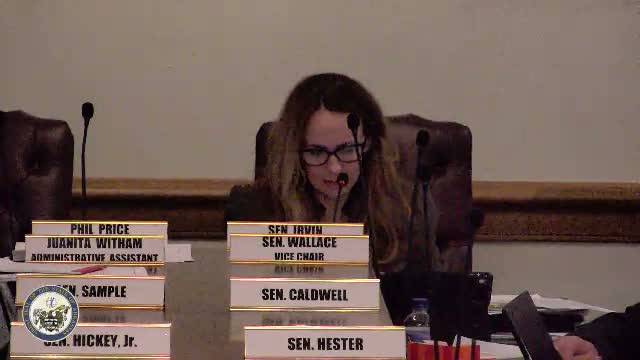
Senate committee rejects bill to raise Medicaid rates and require three-year reviews after funding dispute
Summary
After hours of testimony from DHS officials and providers, the Senate Public Health, Welfare and Labor Committee failed to advance House Bill 18 21, which would have set an 8.8% rate increase for select Medicaid services and required periodic rate reviews; members debated funding sources and federal-match constraints.
The Senate Public Health, Welfare and Labor Committee declined to advance House Bill 18 21 on a roll-call vote after an extended hearing and sharp disagreement over whether state Medicaid funds exist to cover the proposed increases.
House Bill 18 21 would have done two main things: provide an 8.8% rate increase for a narrowly defined set of Medicaid services (including early-intervention day treatment, adult developmental day treatment, personal care under the Our Choices waiver, attendant care/respite and some substance-abuse services) and require the Department of Human Services to review reimbursement methodologies for all Medicaid provider types on a regular cycle.
Sponsor representatives and an attorney from the Mitchell Blackstock law firm urged the committee to support the bill. They said previous Medicaid savings and current appropriations would absorb the cost. Robert Wright, who identified himself for the record as an attorney with experience in state Medicaid finance, estimated the annual cost could be accommodated within existing Medicaid appropriations and said historical savings give the state flexibility to cover about $12 million a year for the increase.
DHS disputed that math. Dawn Staley, deputy director and Medicaid director for DHS, told the committee her agency’s estimate is higher — roughly $20 million in state match and a total fiscal exposure of about $65.5 million when federal match is included. DHS also warned that some elements the bill asks the department to consider in a rate study (for example, uncompensated care or capital-infrastructure needs) are not typically eligible for federal match and could therefore shift additional cost to state dollars.
Providers and advocacy groups representing developmental-disability and aging services delivered urgent testimony in favor of the bill, saying long gaps between rate increases (some provider types had not had increases in nine or more years) combined with multiple minimum-wage hikes have left many programs near or below break-even. Executives from Area Agencies on Aging, Easterseals Arkansas and developmental-disability providers recounted staffing cuts, program reductions and the risk that some providers would be unable to continue serving clients if rates do not keep pace with labor and operating costs.
Committee members pressed multiple practical questions: whether the bill required a separate appropriation; whether federal Centers for Medicare & Medicaid Services approvals would be needed; and whether the proposed private right of action (allowing suit only for equitable relief if DHS failed to conduct required reviews) would expose the state to litigation. DHS witnesses and committee counsel explained that federal approval would be required where federal match is sought and that the private right of action in the bill is limited to process complaints, not money damages.
Senators also noted a mismatch between sponsor and DHS cost estimates and asked about the availability and location of previously reported Medicaid savings. The sponsor’s counsel said historical savings reported by DHS suggested there was room in the budget, while DHS representatives said those savings revert to the state and are not a standing stockpile the department can simply allocate without legislative action.
After debate and public testimony, the committee called for a roll-call vote. The tally reported by the chair was four ayes and one no; the motion to pass the bill failed.
What happens next: the bill did not advance from committee and will not move to the full Senate from this hearing. Advocates said they will continue to press the issue and that DHS and legislators may pursue alternative, staged approaches to rate reviews or funding.
Sources: committee discussion and roll-call proceedings at the Senate Public Health, Welfare and Labor Committee hearing.