Get Full Government Meeting Transcripts, Videos, & Alerts Forever!
Get email alerts on the Public Health Rules topic
No spam. Unsubscribe anytime.
Arkansas Department of Health presents rule package adding substances to controlled list and updating wastewater, food-service rules
Summary
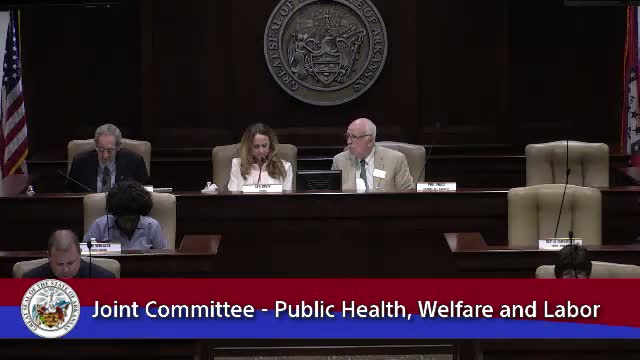
The Department of Health told the Senate Public Health, Welfare and Labor Committee it is adding several hallucinogens and synthetic cannabinoids to state schedules, updating on-site wastewater design standards and requiring certified food-service managers; the committee reviewed each rule without objection.
The Arkansas Department of Health told the Senate Public Health, Welfare and Labor Committee that it is finalizing three rule changes to the controlled-substances list, on-site wastewater standards and food-service oversight.
Laura Hsu, general counsel for the department, introduced the package and said the agency followed a permanent-promulgation process that included public hearings. Pharmacist Shane David said the controlled-substances changes add several hallucinogenic substances to Schedule I, move certain synthetic cannabinoids to Schedule VI and list cannabidiol (Epidiolex) as a prescription product under Schedule V. "We also follow the DEA schedule," David said, noting the department aligned state scheduling with federal guidance.
On wastewater, the department said the rule establishes minimum standards for design and construction of on-site septic systems and soil suitability; the agency said it held a Nov. 16 public hearing, responded to stakeholder comments and posted its responses online. On food service, the proposed rule would require a certified food manager at establishments, with a one-year compliance period, intended to align state practice with the FDA’s four-year guidance cycle.
Committee members asked whether Schedule VI substances would appear in the prescription drug monitoring program; David said he did not believe so because those substances are not issued by prescription and said he would consult the PDMP office if members needed confirmation. There were no public commenters at the hearings for these rules, department staff said. The committee reviewed each rule without objection.
The committee did not take a recorded roll-call vote on the rules; members accepted the agency presentations and requested follow-up detail where needed, including further PDMP consultation and availability of department epidemiology staff for food-safety questions.