Get Full Government Meeting Transcripts, Videos, & Alerts Forever!
Get email alerts on the Scope Of Practice topic
No spam. Unsubscribe anytime.
Senate committee advances bill to let Arkansas optometrists perform limited office procedures after hours of testimony
Summary
After several hours of testimony from optometrists, ophthalmologists and patients, the Senate Public Health, Welfare and Labor Committee voted to pass House Bill 12-51, a measure that would allow certified optometrists to perform five specified office-based procedures; the vote followed contention over training, diagnostic risk and oversight.
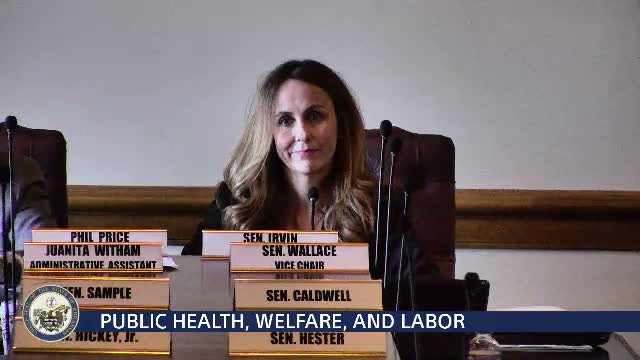
The Senate Public Health, Welfare and Labor Committee passed House Bill 12-51 after more than six hours of testimony that split practicing ophthalmologists, optometrists and patients.
The bill’s sponsor, Sen. Dave Wallace (Dist. 22), told the committee the measure would "allow a patient to walk into the clinic ... have the procedure, and at the end, he can pick up his keys and drive home," framing the change as a narrow expansion of office-based care designed to improve access in rural counties.
Supporters said the measure covers five specific procedures — listed in the bill language as select post‑cataract capsulotomy procedures, certain glaucoma laser treatments, periocular injections that do not penetrate the globe, limited removal of low‑risk eyelid lesions, and removal of benign skin tags — and would explicitly prohibit intraocular surgery or the use of general anesthesia. Sponsor testimony said practitioners must be certified and that outcomes would be reported to the Board of Optometry and to the Department of Health.
Proponents, including the Arkansas Optometric Association and several practicing optometrists, argued the state’s law has not kept pace with education and technology and that allowing the procedures would reduce travel and wait times for rural patients. Dr. Belinda Starkey, president of the Arkansas Optometric Association, testified that optometry education and continuing medical education form a foundation that the proposed credentialing system would build on.
Opponents — led by UAMS faculty and several ophthalmologists — warned that the eyelid and periocular region can mask malignancies and that surgical judgment and complication management require medical school and residency training. Dr. Christopher Westfall, dean of the College of Medicine at UAMS, said eyelid lesions can be ‘‘very difficult to diagnose’’ and cited peer‑reviewed studies showing initial misdiagnosis rates for sebaceous cell carcinoma. Two ophthalmologists who practice in states that allow some expanded scopes described cases where patients received unnecessary or harmful procedures.
Several witnesses recounted individual adverse outcomes. Charlotte Allison described a YAG laser treatment performed out of state that she said left her with persistent haze and pitting of an implanted lens; she said subsequent ophthalmology exams confirmed lasting visual changes. Opponents used that example to argue that poor outcomes can be hard to detect and difficult to remediate once they occur.
Legal and regulatory questions also drew sustained attention. An attorney for the Arkansas Ophthalmologist Society flagged a potential statutory conflict where an existing provision excludes surgeries ‘‘which require anything other than a topical anesthetic,’’ and warned the committee that the bill’s language may leave unresolved questions for courts or permit overly broad agency interpretation if the Board of Optometry is left to define credentialing and scope without narrower legislative guidance.
Supporters responded that other states have credentialing rules, proctoring or mentoring programs, and statutory frameworks the Arkansas board could emulate; Dr. Brian Ashley, representing the Arkansas Optometric Licensing Board, said passage would not let practitioners begin these procedures until the board issues rules and credentialing standards.
After closing remarks from sponsors reiterating access and workforce concerns, the committee voted on a motion by Sen. Wallace to pass the bill; the motion was seconded by Sen. Hester. The roll call recorded multiple 'Aye' votes and a recorded 'No' from Chair Irvin. The committee announced that the bill passes and adjourned.
The bill will move to the next step in the legislative process; specific rule‑making, credentialing standards and any statutory clarifications about permissible anesthetics or required proctoring would be determined if the broader law changes and the board promulgates implementing rules.