Get Full Government Meeting Transcripts, Videos, & Alerts Forever!
Get email alerts on the Professional Licensing topic
No spam. Unsubscribe anytime.
Committee Advances Physical‑Therapist Compact and Podiatry Collaborative‑Practice Clarifications
Summary
Representative Justin Boyd presented a package of bills including a physical‑therapist compact (HB 1422) and a bill clarifying podiatrists may employ APRNs under collaborative practice agreements limited to podiatry; the Department of Health said it had no formal position on the podiatry bill and members discussed billing and scope questions.
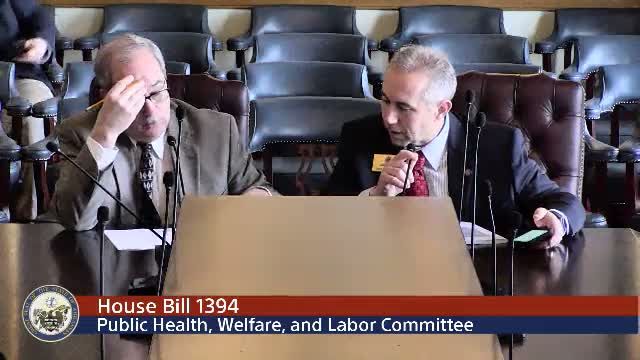
A package of professional‑licensing bills moved through the Public Health, Welfare and Labor Committee after presentations by Representative Justin Boyd. The measures included House Bill 1422, a companion to a compact allowing Arkansas‑licensed physical therapists and physical therapy assistants to practice in other compact states, and related language (HB 1421) to implement compact mechanics. Boyd said the compact requires applicants who join to undergo FBI background checks and that the compact is supported by physical‑therapy professional associations.
The committee also considered a bill (referenced in the hearing as "12:30") to clarify that podiatrists may employ advanced practice registered nurses (APRNs) under collaborative‑practice agreements that are limited to podiatry scope. Boyd said the nurse practitioner must be an employee of the podiatry clinic and that the nurse's board‑of‑nursing file should reflect limits to podiatry duties. Senator Caldwell and others asked the Department of Health about podiatrists' pharmacology training and whether podiatrists write Schedule II drugs; Laura Shue said the department did not have that detail available and would need to research it. Representative Boyd and committee members clarified that the bill is not intended to expand nurse practitioners' prescribing scope beyond podiatry practice; instead, it creates an employment pathway for APRNs to work in podiatry clinics.
Committee members also discussed billing and insurance implications of collaborative agreements; Boyd warned that even if statutory collaborative requirements were later removed, insurance billing practices could continue to require agreements for reimbursement. Committee members moved and passed HB 1422 and subsequently passed the remaining licensing items by voice vote.
What happens next: The compact and podiatry clarification advanced out of committee by voice votes; staff and sponsors indicated follow‑up would address any drafting questions and the Department of Health offered to supply technical information on training and prescribing authority.