Get Full Government Meeting Transcripts, Videos, & Alerts Forever!
Get email alerts on the Medical Consent Homeless Minors topic
No spam. Unsubscribe anytime.
Committee approves bill letting school liaisons consent to medical care for homeless minors
Summary
SB340 authorizes a local educational agency liaison to consent to medical treatment for homeless minors meeting the McKinney‑Vento definition who are not in custody of a parent, guardian or Department of Human Services; committee members pressed sponsors on verification procedures and liability concerns before passing the bill by voice vote.
Little Rock — The Senate Public Health, Welfare and Labor Committee passed SB340, which would authorize a designated liaison from a local educational agency (LEA) to consent to medical treatment for homeless minors who meet the McKinney‑Vento definition and are not in the custody of a parent, guardian or the Department of Human Services.
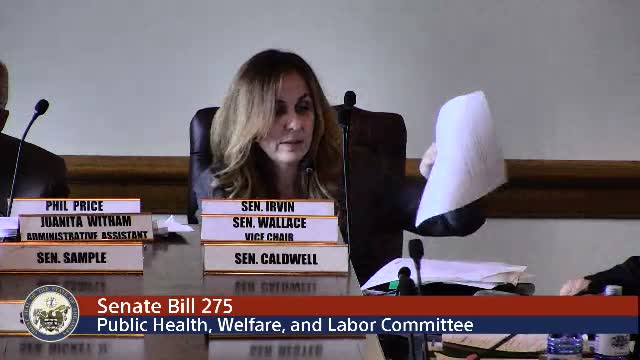
Senator Irvin, sponsor of SB340, described the bill as a targeted fix so homeless students who attend school but lack a legal guardian can receive needed medical care. “This bill… authorizes a local educational agency liaison to consent for medical treatment for homeless minors,” Irvin said.
David Ivers, an attorney with the Mitchell Blackstock firm, told the committee the issue arises when minors are in a gray area—living with a relative, teacher or friend but without a legal guardian—and providers will not treat without legal consent. “There might be a relative or someone in the picture, but they're not the guardian,” Ivers said, adding “they're just kinda in between those 2 spots.”
Committee members asked how schools would verify the three statutory conditions and whether liaisons would be required to document that they had checked those conditions. Senator Hendrick pressed for written verification to protect LEA employees if a parent later contests consent; Ivers said the Department of Education worked on the bill language to address the department’s concerns and that the department tracks homelessness data.
Members also raised concerns about payment and legal exposure if a liaison consents to treatment and medical bills accrue. Senator Hammer asked whether the designated person would become financially or legally responsible. Ivers said payment and coverage would depend on the child’s insurance status (Medicaid or other) and that the Department of Education would not expect liaisons to assume personal financial responsibility. He noted providers who treat without appropriate consent may be liable under Arkansas statutes. “As far as who's legally liable, for if you treat someone without appropriate consent, the provider's the 1 that's liable for that,” Ivers said.
The sponsor and attorney said the Department of Education reviewed and reworded the bill to make the LEA’s authority explicit and expected liaisons to confirm payment arrangements before seeking treatment. The committee voted to pass SB340 by voice vote.
What’s next: SB340 passed the committee; the bill’s practical application depends on implementing guidance from the Department of Education and any rules or local LEA procedures required to document eligibility, consent and payment arrangements.