Get Full Government Meeting Transcripts, Videos, & Alerts Forever!
Get email alerts on the Licensing Counselors topic
No spam. Unsubscribe anytime.
Senate committee approves licensure changes to cut red tape for counselors
Summary
The Senate Public Health, Welfare and Labor Committee approved SB164 to ease licensure timelines and allow endorsement of out‑of‑state supervision for counseling licensees, shorten exam retake wait times and add probation as a disciplinary option; rules will set implementation details.
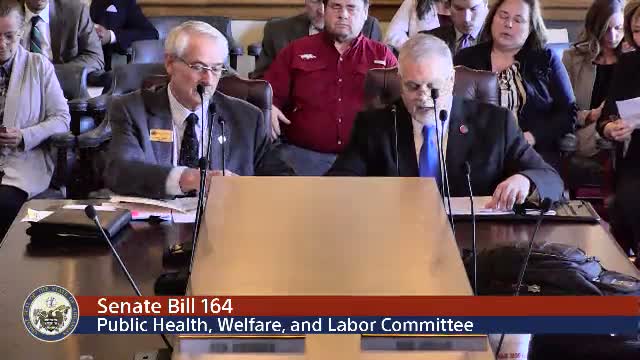
Little Rock — The Senate Public Health, Welfare and Labor Committee on an aye voice vote passed SB164, a bill the sponsor said is intended to reduce regulatory barriers for licensed professional counselors and marriage and family therapists.
Sponsor Senator Cooper said the measure grew from a state red‑tape reduction task force and reflects voluntary simplifications proposed by the licensing board. “This bill is a, is an outgrowth of the task force effort in, the red tape reduction committee,” Cooper said.
John Carmack, who identified himself as “the executive director of the board counseling board,” told the committee the bill retains the 3,000‑hour client‑contact requirement but removes the statutory requirement that those hours be completed within three years and adds an endorsement pathway for applicants who can show prior supervised experience and core curriculum from another state. “It still is 3,000. It’s just that we’ve given them other avenues of way the ways they can obtain that,” Carmack said.
Carmack said the bill also shortens the required wait to retake a failed written examination from two years to three months, allowing applicants to attempt the exam every three months until they pass. “If you don't pass that written exam, you're allowed to take it in 3 months,” he said. The bill would also provide statutory authority to place licensees on probation as an added disciplinary tool.
Committee members asked how the changes would affect costs for associates who must pay supervisors. Senator Hammer asked whether the changes apply to LPCs and marriage and family counselors and whether they would lower supervision expenses. Carmack replied that “the rules and regs will reduce the fees to the associate status so that it will be less costly to the associate status level.”
Senator Hickey pressed for detail on the crediting options for post‑master coursework and the bill’s minimums; Carmack said subsection B permits credit for postgraduate coursework (with a cap tied to the rules) but that applicants must still meet a stated minimum of hours in the statute. He told the committee that up to 60 post‑master hours can be credited under the rules.
Carmack said technology‑assisted supervision (for example, Zoom or telephone) will count as supervised face‑to‑face contact when the supervisor is consulting directly with the trainee, though some face‑to‑face or 'raw data' encounters will remain required in the agency’s rules and regulations.
The committee approved SB164 on a motion to pass; the record shows a voice vote and the chair announced the bill passed. Carmack told the committee the board will use the rules‑making process to define details such as supervision form, crediting and fee adjustments.
What’s next: SB164 passed the committee by voice vote; implementation details (supervision definition, crediting limits, fee schedules) will be set through the board’s rules and regulations process.