Get Full Government Meeting Transcripts, Videos, & Alerts Forever!
Get email alerts on the Abortion Policy topic
No spam. Unsubscribe anytime.
Senate committee advances House Bill 1439 to ban pregnancy terminations for fetuses diagnosed with Down syndrome
Summary
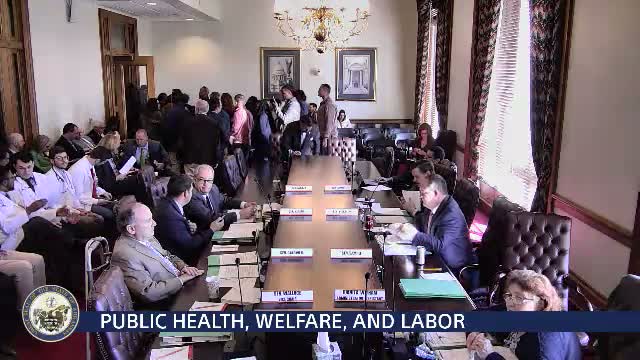
The Senate Public Health, Welfare and Labor Committee adopted amendments and voted to pass House Bill 1439, which bars abortions performed based on a prenatal diagnosis of Down syndrome and narrows the bill's language from "genetic selection" to "Down syndrome." Supporters framed the bill as protecting people with disabilities; Planned Parenthood testified in opposition, citing constitutional and health concerns.
House Bill 1439 moved forward in the Senate Public Health, Welfare and Labor Committee on a voice vote after adoption of an agreed amendment intended to mirror exceptions in prior measures and to substitute the term "Down syndrome" for the broader phrase "genetic selection." Senator Missy Irvin presided; the sponsor, Senator Trent Garner, introduced the measure and explained the amendment before the committee adopted it by voice vote.
The bill prohibits abortions performed because a prenatal test indicates the fetus has Down syndrome, with limited exemptions for medical emergencies and spontaneous abortions. Senator Garner said the change was "a cleaner version" of prior language designed to survive legal challenges and described the measure as a step to "protect the lives of unborn children" by moving the protected line to 18 weeks in alignment with other enacted provisions.
Planned Parenthood Great Plains Votes opposed the bill. Gloria Pedro told the committee the proposal is "an unconstitutional attempt to ban safe legal abortion in Arkansas" and argued that "a woman's health should drive important medical decisions, not political agendas." Pedro warned the measure could expose physicians to criminal investigation and said leading medical organizations oppose bans that prescribe clinical care.
Senator Garner and family members put a personal face on the bill. Sponsor remarks included a personal testimony about his brother Troy Garner, who the sponsor said "was born different" and whose life he described as valuable and deserving of dignity. Troy Garner and other parents and family members urged the committee to support the measure on those grounds.
Action and next steps: Committee members adopted the amendment and then moved that the bill do pass; the motion carried by voice vote. Committee staff indicated the bill will be scheduled for floor consideration next; the committee also agreed to coordinate technical edits and consult OB-GYN expertise to refine provisions on medical-emergency language and reasonable time to obtain records.