Get Full Government Meeting Transcripts, Videos, & Alerts Forever!
Get email alerts on the Abortion Regulation topic
No spam. Unsubscribe anytime.
Arkansas committee hears contested bill to codify clinic standards, extend abortion waiting period and add penalties
Summary
Sen. Stubblefield’s SB278 would codify Department of Health standards for abortion facilities, extend the waiting period from 48 to 72 hours and increase some reporting penalties; Planned Parenthood opposed the bill and committee members pressed sponsor to amend felony penalties and emergency exceptions.
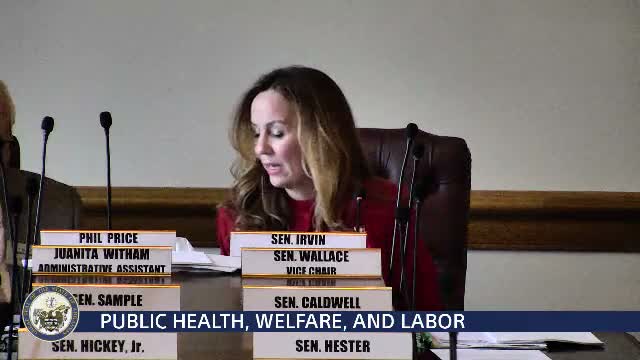
Senator Trent Stubblefield introduced Senate Bill 278 to the Public Health, Welfare and Labor Committee, saying the measure would codify existing Department of Health rules and an Eighth Circuit opinion while adding new statutory requirements for abortion facilities. "Abortion patients will have access to a 24 hour telephone consultation with either a registered nurse or physician associated with the abortion facility," Stubblefield said, and the bill would require written emergency-transfer procedures, on-site emergency drugs and documented cardiopulmonary resuscitation competency for clinical staff.
The bill also seeks to extend the state's waiting period for abortion from 48 to 72 hours and to expand reporting requirements. Stubblefield said the longer waiting period builds on the 2015 Women's Right to Know Act and, in his framing, has contributed to saving unborn lives.
In testimony opposing the measure, Gloria Pedro of Planned Parenthood Great Plains Votes warned the committee that increasing the waiting period and imposing additional facility regulations would worsen access to care, especially for rural and low-income women. "This bill would increase the current state mandated waiting period for an abortion from the already excessive 48 hours to 72 hours, forcing women to wait even longer before accessing medical care," Pedro said. She told the committee that mandatory waiting periods have been shown to have no health benefit and to increase costs, travel burdens and delays, sometimes pushing procedures later in pregnancy.
Committee members pressed the sponsor on the bill's criminal penalties. Several provisions treat reporting failures and certain waiting-period violations as criminal offenses, and some lines in the draft change classifications from misdemeanors to class D felonies. Senators raised concerns about whether doctors acting in true medical emergencies could face felony exposure, and several asked for clearer emergency exceptions and a fiscal impact statement to account for judicial costs.
Ken Yang, director of governmental affairs at Family Council, told the panel that portions of the bill mirror existing Department of Health rules and that the sponsor was largely codifying those administrative standards rather than creating wholly new requirements. The sponsor and other members acknowledged there are sections that have existed in prior state law and said they would work to resolve statutory language questions.
The committee allowed public testimony and then debated the penalty structure. Stubblefield said he would pull the bill to draft amendments addressing committee concerns, including the felony provisions and emergency exceptions, and return at a later date. No committee vote was taken on SB278 during the hearing.
The next step, according to the sponsor, is to revise the bill to clarify emergency medical exceptions and the criminal classifications before the measure is resubmitted for committee consideration.