Get Full Government Meeting Transcripts, Videos, & Alerts Forever!
Get email alerts on the Unemployment Insurance topic
No spam. Unsubscribe anytime.
Committee backs indexing taxable wage base to unemployment activity to ease employer costs
Summary
The committee passed SB 298 to index Arkansas' taxable wage base for unemployment insurance to the insured-unemployment rate. Proponents said indexing reduces ad hoc tax increases and can save employers money when the trust fund is healthy; opponents sought clarity on triggers and fiscal monitoring.
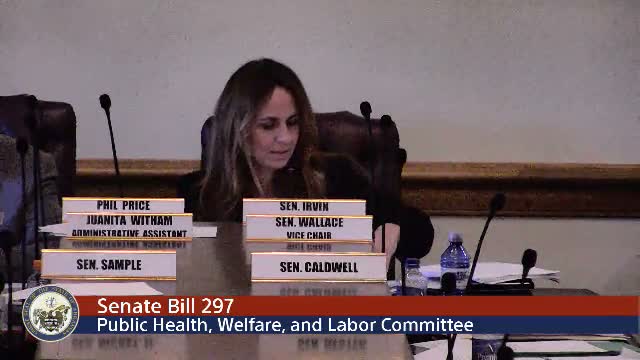
The Senate Public Health, Welfare and Labor Committee on Wednesday passed SB 298, a bill that would index the taxable wage base used to calculate unemployment insurance taxes to the insured unemployment rate.
Department of Workforce Services staff said the current wage base is $10,000 and that indexing could reduce it to as low as $7,000 in favorable economic conditions. "For every employee, an employer will realize on average $22 savings for every thousand dollars below 10,000," a department witness said.
Business representatives Kenny Hall of the State Chamber and Mike Moore of the Friday Firm told the committee they strongly support the measure. Hall outlined the history of adjustments to the wage base — including a 2017 change that lowered the base from $12,000 to $10,000 — and said indexing would avoid repeated, politically difficult adjustments while protecting solvency via triggers that raise the base during deep recessions.
Senator Hickey asked whether indexing preserves growth in the trust fund and whether the state remains "overfunded." DWS staff said the average high-cost multiple is about 1.2 (the U.S. Department of Labor preference is 1.0), indicating a modestly positive balance, and said the indexing design includes triggers to raise the base if required to avoid insolvency.
Why it matters: Indexing the wage base would make annual employer UI-tax exposure more responsive to unemployment trends and could reduce employer contributions when the labor market is strong. DWS staff said the fund remains above minimum recommended levels, giving room to lower the base without threatening solvency.
What comes next: The committee passed SB 298; it will move to the Senate calendar for further consideration.