Get Full Government Meeting Transcripts, Videos, & Alerts Forever!
Get email alerts on the Tax Cuts topic
No spam. Unsubscribe anytime.
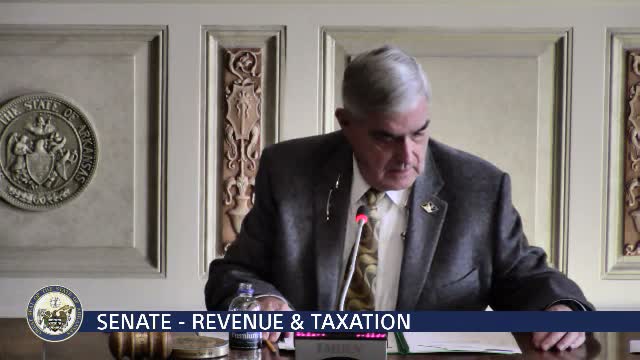
Senate Revenue & Tax Committee advances House tax measure after public opposition and fiscal briefing
Summary
The Senate Revenue & Tax Committee advanced a House tax bill by voice vote after public testimony criticized the distribution of benefits and the Department of Finance and Administration delivered a fiscal-impact briefing; the bill’s sponsor declined an amendment to add law enforcement to eligibility.
The Senate Revenue & Tax Committee voted by voice to advance a House tax bill after brief debate, public testimony and a fiscal-impact overview.
The bill’s sponsor (identified only in the transcript as a presenting senator) told the committee the measure had been heard previously and was also on the floor. During questioning another senator asked whether the bill should include law-enforcement personnel; the sponsor said no, citing testimony and conversations with law-enforcement officials who, the sponsor said, had not expected the bill to provide supplemental payments to federal officers.
Public testimony included sharp criticism from Dan Whitfield of Bella Vista. "70% of the tax cuts will be going to the wealthiest 20% of Arkansans," Whitfield said, and he added that "those making under $22,000 a year will see no benefit," arguing the measure would not help many low-income residents who, he said, need services now.
Paul Gehring of the Department of Finance and Administration briefed the committee on the fiscal impact, saying it was "identical to the revenue impact that we issued for Senate Bill 1 as originally filed," and answering senators' questions about tax-credit line items and whether any credits in state code are refundable.
A member of the public who identified himself as Paul Calvert spoke in favor of the bill, criticizing government spending and saying reduced spending and taxation better protect individual liberty.
After testimony and brief discussion, a motion to pass was made and seconded and the committee advanced the measure by voice vote; no roll-call tally was recorded in the transcript.
The committee then moved on to other bills and adjourned later in the session.