Get Full Government Meeting Transcripts, Videos, & Alerts Forever!
Get email alerts on the Economic Development Tax Credit topic
No spam. Unsubscribe anytime.
Committee advances bill to extend recycling tax credit for large steel projects
Summary
Senate Bill 543 would allow recycling tax credits equal to 30% of eligible equipment costs for qualifying steel mill projects that invest more than $200 million, create at least 150 jobs with average wages of $75,000 and pass a positive cost–benefit analysis; committee advanced the bill after DFA said credits are conditioned on incentive agreements and clawbacks and are not expected to change the fiscal forecast.
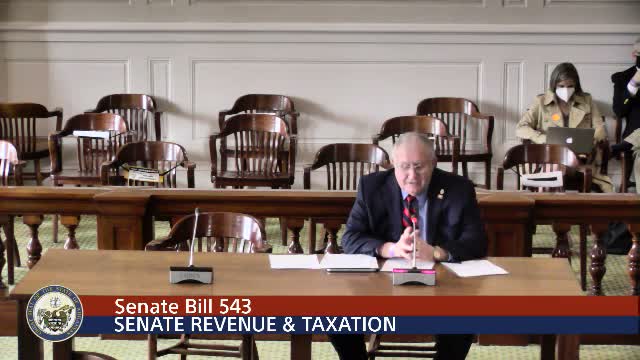
State Senator Dave Wallace (District 22) told the Senate Revenue & Tax Committee that Senate Bill 543 extends a previously enacted recycling tax credit for large steel mill projects and would allow a 30% credit on eligible equipment costs for projects that meet stringent thresholds: total investment greater than $200 million, at least 150 new jobs and average annual wages of $75,000.
"For projects that qualify, this bill will allow for recycling tax credits calculated at 30% of the expense of eligible equipment," Wallace said, describing Mississippi County as one of the state’s largest steel-producing counties and emphasizing local job growth in the sector.
Paul Gehring of DFA told the committee the tax credit is conditioned on incentive agreements that include positive cost–benefit certifications and clawback provisions, and therefore DFA does not expect the bill to change the state’s fiscal forecast or the governor’s balanced budget estimate for May. Gehring compared the analysis to a prior tax-credit structure for the wood industry.
Members discussed the project timeline and whether extending the claim period would merely change when companies claim credits rather than the net amount of credits; supporters urged cooperation for large “mega projects” while noting the bill requires a positive fiscal certification before credits would be issued. The committee moved the bill and recorded a voice vote advancing SB543 out of committee.
The bill’s sponsor and DFA said tax credits would not be issued unless the project’s incentive agreement and the state’s economic-analysis offices certified a positive cost–benefit outcome; the credit would be available only after a facility is operational and job/wage thresholds are met.