Get Full Government Meeting Transcripts, Videos, & Alerts Forever!
Get email alerts on the Committee Votes topic
No spam. Unsubscribe anytime.
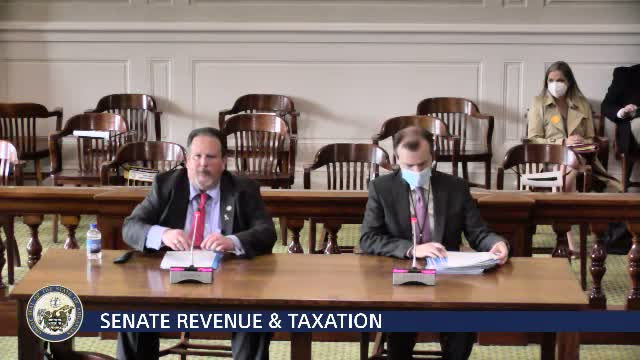
Senate Revenue & Tax Committee advances three tax-administration bills
Summary
The committee advanced three measures: HB1050 lowers the mandatory electronic filing threshold from 250 to 50 (with DFA waiver authority); HB1043 extends Tax Procedure Act limits and waiver authority to Public Service Commission ad valorem assessments; HB1048 allows DFA to offset refunds to satisfy final assessments before filing liens.
The Senate Revenue & Tax Committee on Monday advanced three administrative tax measures aimed at modernizing collection procedures and aligning statutory protections.
Representative Howard Beatty told the committee House Bill 1050 would lower the employer threshold for mandatory electronic filing of annual withholding statements “to 50 so that employers with 50 or more employees would be required to file income tax withholding statements electronically,” and that DFA could waive the requirement for employers with fewer than 250 employees if the electronic mandate would cause an undue hardship.
House Bill 1043 would apply the Tax Procedure Act’s statute of limitations and DFA waiver authority to ad valorem taxes assessed by the Public Service Commission and collected by DFA. Beatty said debts older than 10 years are already treated as uncollectible and the bill is intended to mirror DFA’s existing authority for other taxes.
House Bill 1048 would allow DFA to offset a taxpayer’s refund against an outstanding tax delinquency after issuance of a final assessment and before filing a certificate of indebtedness to avoid lien costs and protect taxpayers’ credit ratings. Paul Gehring of the Department of Finance and Administration (DFA) told the committee the change would reduce clerk’s filing and mailing costs and would not affect taxpayers’ rights to contest assessments under the Tax Procedure Act.
Each bill was moved, seconded and advanced by voice vote in committee. The record shows the chair called for the ayes and indicated the motions carried; precise roll-call tallies were not recorded in the transcript.
The measures now proceed to the next stage of the legislative process.