Get Full Government Meeting Transcripts, Videos, & Alerts Forever!
Get email alerts on the Tax Credit Law Enforcement topic
No spam. Unsubscribe anytime.
Senate committee hears proposal for $3,000 tax credit for Arkansas law enforcement; DFA pegs cost at about $15.3M
Summary
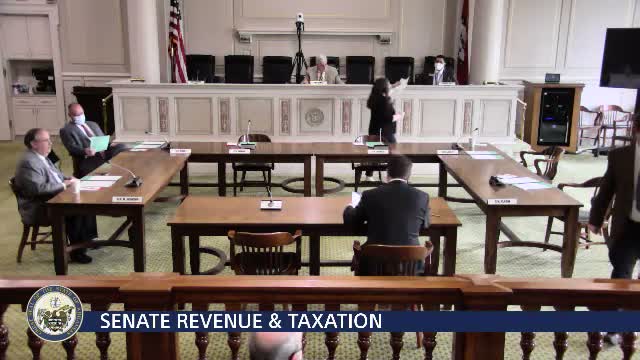
The Senate Revenue & Tax Committee heard testimony on SB 304, which would give qualifying full‑time law enforcement officers a $3,000 nonrefundable state income tax credit. DFA estimated a $15.3 million annual revenue impact and the committee took no vote at the hearing.
Senate Revenue & Tax Committee members on Thursday heard testimony on Senate Bill 304, a proposal to provide a $3,000 nonrefundable state income tax credit for qualifying full‑time law enforcement officers. Sponsor remarks and testimony from county representatives and sheriffs emphasized recruitment and retention challenges tied to low starting pay.
The bill’s sponsor, Senator Rayburn, pointed committee members to a task force report that identified low starting salaries as a leading obstacle for hiring and retention. "Salaries for law enforcement in Arkansas [are] among the lowest in the nation," Rayburn said, and he told members the proposed credit is intended to help officers keep more of their paychecks rather than add new direct appropriations.
Mark Whitmore of the Association of Arkansas Counties told the committee that recruitment problems are acute in many rural jurisdictions and that Arkansas ranks near the bottom nationally for law enforcement pay. Whitmore described the bill’s eligibility mechanics: it targets full‑time employees (presented in testimony as working more than 25 hours per week) and would require roughly 11 months of service in a 12‑month period to qualify, with county clerks or agency chiefs verifying eligibility.
Two county sheriffs described local impacts. Sheriff Rodney Wright of Saline County said the proposal would affect "every law enforcement officer in the state of Arkansas," arguing that public safety considerations make pay a priority. Sheriff Hobie Runyon of Sebastian County described falling applicant numbers and recent losses of deputies to neighboring states, saying it can take several months of academy training plus field training and years before officers reach full productivity.
Paul Gehring of the Department of Finance and Administration (DFA) presented the bill’s fiscal impact. "As currently drafted, the bill provides for a $3,000 nonrefundable income tax credit," Gehring said, and DFA’s calculation used an estimate of about 8,395 potentially eligible officers and an average salary around $40,000 to produce a fiscal impact of roughly $15,300,000 per fiscal year. Gehring added that DFA’s estimate is a static revenue impact and does not account for potential cost savings from improved retention.
Senator Johnson asked whether unused portions of the credit would be refundable or carried forward; witnesses and DFA responded that the credit, as drafted, is nonrefundable and does not include a carryforward provision. DFA noted the fiscal statement could be revisited if the bill’s provisions change.
No vote was taken at the hearing because the DFA physical impact statement was presented; the committee will consider the bill and its fiscal implications in future action. The hearing record includes testimony from county association representatives, two county sheriffs and DFA staff; committee staff will work with sponsors and the DFA on any amendments or additional cost offsets before the committee moves toward a vote.