Get Full Government Meeting Transcripts, Videos, & Alerts Forever!
Get email alerts on the Tax Transparency Sb 528 topic
No spam. Unsubscribe anytime.
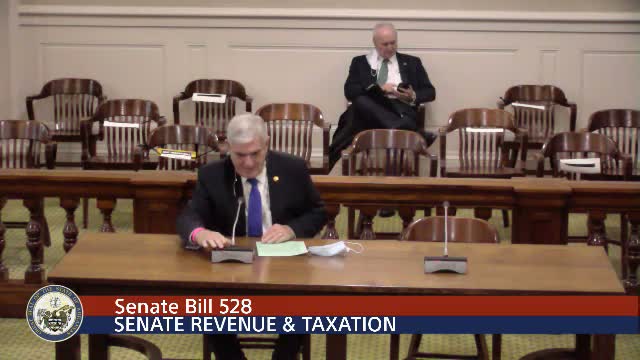
Senate committee adopts amendment to bill aimed at improving transparency for sales-tax rebates
Summary
The Senate Revenue & Tax Committee adopted an amendment to Senate Bill 528, which would change how cities and counties track sales-and-use tax rebates and include a confidentiality provision; local officials testified that unexpected rebates and refunds have caused major budget disruptions.
The Senate Revenue & Tax Committee adopted an amendment to Senate Bill 528 and heard testimony from city and county officials who said the measure would help local governments track and forecast sales-and-use tax rebates. The committee did not take final action on the bill and agreed to place it on the next meeting agenda.
Senator Sample (bill sponsor, District 14) told committee members the measure — developed with DFNA input — would improve reporting and visibility into rebates that are currently difficult for cities and counties to track. "It is a bill that has long been needed," the sponsor said, and added the proposal includes a confidentiality provision; the sponsor said unauthorized disclosure by city or county employees would be a class A misdemeanor.
Garland County Judge Daryl Mone said the county had been significantly affected by the current process. "It affected us last year, almost a 10% of our revenue from our sales tax, about $925,000 worth," Mone said, describing the difficulty of forecasting budgets when rebate activity is opaque. Bill Burrow, city manager for Hot Springs, said his city relies entirely on sales tax because it has no local millage; he said similar rebate activity produced about $860,000 over recent years and that cities are not opposed to rebates but need better visibility.
Brenda Weldon, mayor of Malvern, described a case in which she had to repay $263,000 after DFNA notified the city that one business's taxable status had changed; she said the city was not initially told who was affected and that GIS mapping errors had been part of the confusion. "If she had not called me, I would have quit getting that sales tax and didn't have any recourse," Weldon said, describing hours spent researching property records and asking the assessor's office to correct the record.
Committee members and witnesses discussed the bill's confidentiality clause and penalties for unauthorized disclosure, with at least one member noting the obligation to keep certain DFNA information confidential would remain in force if the bill passes. The sponsor also told members the bill would require development of software to administer reporting — an estimated one-time cost of about $140,000 and roughly $48,000 annually for maintenance, according to discussion in the hearing.
Because the bill carries a fiscal impact, the committee did not take a final vote on SB 528 at the meeting. Members agreed to schedule the bill for further consideration on the Monday agenda and to invite additional agency witnesses, including law enforcement agencies referenced by the sponsor, before any final action. The committee adjourned without a final passage vote.