Get Full Government Meeting Transcripts, Videos, & Alerts Forever!
Get email alerts on the Tax Delinquent Property topic
No spam. Unsubscribe anytime.
Committee oks restriction on non-U.S. domiciliaries and authorizes online post-auction sales
Summary
The Senate Revenue & Tax Committee voted to pass HB1229, which renames three sale types administered by the Commissioner of State Lands, bars purchasers domiciled outside the United States from buying tax-delinquent land, and allows online post-auction and negotiated sales while preserving an initial county auction requirement.
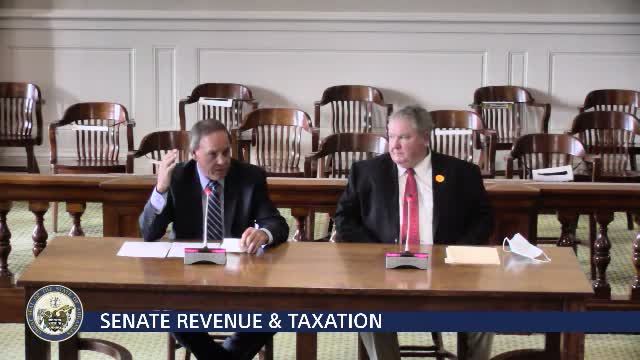
The Senate Revenue & Tax Committee voted to pass HB1229, a bill to revise how tax-delinquent property is sold and to bar purchases by people domiciled outside the United States.
Kelly Boyd, chief deputy commissioner of state lands, told the committee the bill clarifies three sale categories: the initial physical county auction for tax-delinquent property; a post-auction sale for parcels that did not sell at the physical auction (occurring up to two years afterward); and a negotiated sale for unsold parcels after two years. Boyd said the measure would allow the post-auction and negotiated sales to be conducted online while keeping the initial auction physical and local.
Boyd told the committee the bill would prohibit purchases by people domiciled outside the United States and said the office identified 71 instances over the past four years in which buyers from jurisdictions including Puerto Rico, Canada, Great Britain, Ireland and Australia purchased property from the Commissioner of State Lands. "We don't have any way of notifying those people," Boyd said, describing the difficulty of pursuing tax collection or notices when owners live abroad. Under the bill, Boyd said, purchases by non‑U.S. domiciliaries would be forfeited and the property returned to sale.
Senator Johnson pressed on two possible gaps: whether an American citizen who is domiciled abroad (for example, for work) would be barred from purchase and whether corporate entities could be used to evade the domicile restriction. Boyd said the bill follows military "home of record" language and would require a home of record in the Continental United States, Alaska or Hawaii to be eligible. On corporate purchasers, Boyd acknowledged the office lacks comprehensive corporate‑ownership verification tools and said the strongest available remedy is forfeiture and return of funds if a prohibited buyer is discovered; he offered to work further with members on additional measures.
Senator Desmain disclosed he works for Rywell LLC, an entity that has bought and sold tax‑delinquent property, and said he will submit a formal written disclosure.
Senator Johnson moved that the committee "do pass" HB1229; Senator Caldwell seconded and the chair took a voice vote. The committee chair declared the bill passed.
The bill clarifies sale types and adds enforcement language intended to limit purchases by those domiciled outside the United States while expanding the state's ability to market unsold property via online post‑auction and negotiated sales.