Get Full Government Meeting Transcripts, Videos, & Alerts Forever!
Get email alerts on the Pass Through Tax topic
No spam. Unsubscribe anytime.
Senate committee advances bill allowing pass-through entities to elect entity-level tax
Summary
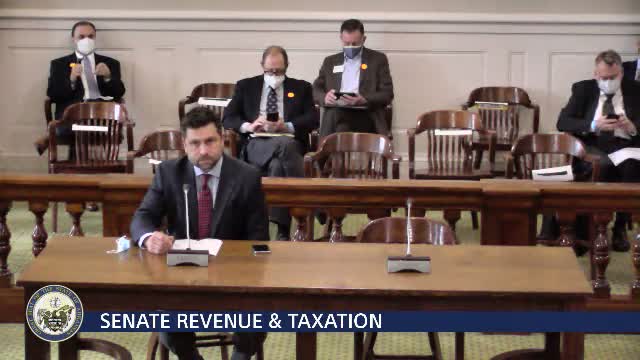
The Senate Revenue & Tax Committee voted to advance House Bill 1209, which would let LLCs and S corporations elect to be taxed at the entity level at a flat 5.9% rate; DFA estimated roughly $4.24 million in additional state revenue, while the sponsor cited an estimated $50 million in federal tax savings for taxpayers.
House Bill 1209 was presented to the Senate Revenue & Tax Committee as a response to federal limits on state and local tax (SALT) deductions. Senator Dismain, the bill sponsor, said the measure would let pass‑through entities such as LLCs and S corporations elect to be taxed at the entity level, rather than flowing income through to individual owners.
Senator Dismain said proponents expect a benefit to Arkansas taxpayers and budget: "it results in, I think, the revenue impacts about $4,000,000 of additional revenue to the state, but an estimated $50,000,000 worth of tax savings on the federal level for those same, taxpayers." The sponsor described the change as an optional, annual election made by entities in consultation with their CPAs.
Paul Gehring of the Arkansas Department of Finance and Administration presented DFA's fiscal analysis. He told the committee: "Under the bill, they would be taxed at a flat rate of 5.9%." DFA estimated approximately $4,240,000 in additional general revenue as a result of entities electing to be taxed at the entity level, based on returns DFA reviewed and assumptions about which entities would opt in.
Committee members asked how the flat 5.9% entity rate compared with the state's progressive individual tax rates and where the breakpoint was for an entity to benefit. DFA and the sponsor explained that the advantage depends on an entity's state and local tax liabilities and the interaction of marginal and effective tax rates; they reiterated that the election would be voluntary and annually selectable.
The committee took a motion "do pass" (second recorded as Senator Johnson). The chair called the voice vote and announced the bill had passed the committee and would move forward.
Next steps: the bill will proceed out of committee as passed; DFA and committee members noted further technical and administrative work may be done before any final enactment.