Get Full Government Meeting Transcripts, Videos, & Alerts Forever!
Get email alerts on the Education Technology Tax Exemption topic
No spam. Unsubscribe anytime.
Senator introduces bill to extend textbook tax exemption to student devices; DFA estimates $4.4M revenue impact
Summary
Senate Bill 244 would treat student instructional devices the same as textbooks for the state sales-and-use tax exemption; Bryant Schools superintendent and DFA testified about district costs and an estimated $4.4 million revenue hit in FY2022. The committee heard testimony and did not vote.
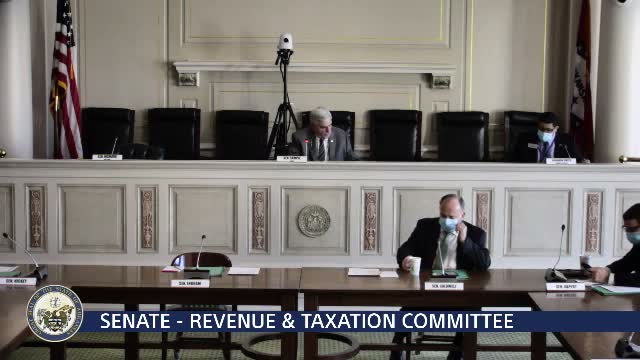
Senator Kim Hammer introduced Senate Bill 244 to the Senate Revenue and Tax Committee, seeking to extend the state sales-and-use tax exemption that currently applies to textbooks to include student electronic devices used for instruction. Hammer told the committee the change is meant to reflect districts’ shift from hardback textbooks to tablets, Chromebooks and iPads, especially during recent remote‑learning (AMI) periods.
Karen Walters, superintendent of Bryant Schools, testified in support. Walters said districts “very rarely buy a textbook anymore” and that student devices are essential for virtual instruction. She told the committee that, for her district, the sales tax associated with replacing secondary student devices would be “about $260,000” and that replacing devices across elementary grades would add a similar cost. Walters also offered district‑level estimates comparing textbook and device costs: a single subject’s classroom hardback textbooks for all students could run about $540,000, while device replacement across roughly 5,400 students could total an estimated $2.3 million. Walters said an iPad with AppleCare runs about $428 in her district and characterized the overall shift in costs as roughly a “wash,” while emphasizing replacement and robustness considerations.
Paul Gehring of the Arkansas Department of Finance and Administration (DFA) presented an updated fiscal‑impact statement that DFA issued that morning. Gehring said DFA had used Department of Education data to estimate technological expenditures and concluded the revenue impact of the proposed exemption would be approximately $4,400,000 in fiscal year 2022 and about $4,500,000 in fiscal year 2023. Gehring said DFA’s appearance was to register concern about the revenue impact and that “this is not accounted for in the governor’s balanced budget.” He added that DFA had no administrative objections to the bill’s implementation.
Committee members pressed Walters on cost comparisons and lifecycle issues. Senator Johnson asked whether districts come out ahead financially by shifting to devices; Walters said she could not be definitive but offered the estimates noted above and stressed that some vendors no longer produce hardback editions and that districts maintain classroom sets as backup.
Senator Hammer closed by asking members to consider the revenue accounting and said he would follow up with DFA before returning the bill to the committee. The committee heard testimony but took no vote on SB 244 at this meeting.
The committee’s next procedural step was not scheduled during this hearing; Senator Hammer indicated he would return later to continue consideration after further review with DFA.