Get Full Government Meeting Transcripts, Videos, & Alerts Forever!
Get email alerts on the House Bill 19 11 topic
No spam. Unsubscribe anytime.
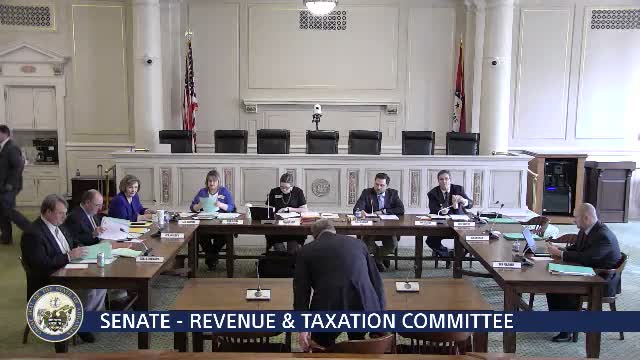
Senate committee passes HB 19‑11 after removing clause that would have undercut DFA rule authority
Summary
House Bill 19‑11, which would adopt portions of the Internal Revenue Code on grantor trusts into Arkansas law (IRC 671–679), passed the Senate Revenue & Tax committee as amended after members removed a section that said the DFA lacked authority to promulgate a 1997 rule; DFA warned the omitted language could trigger $20 million in amended returns.
Representative Warren presented House Bill 19‑11 to the Senate Revenue & Tax committee, saying the measure would adopt Internal Revenue Code sections 671 through 679 into Arkansas law to align state and federal tax treatment of grantor trusts and provide clarity for taxpayers. Sponsor testimony framed the bill as prospective and designed to give trust practitioners time to adapt.
Anton Janek, a tax attorney with Mitchell Williams, testified in favor and said he had “been blown away to find out Arkansas was 1 of only 3 states who has never adopted any portion of the Internal Revenue Code federal grantor tax laws.” Janek urged prospective application, noting the amendment in the packet would adopt the code as in effect on 01/01/2019 and make the changes effective for tax years beginning 2020.
Paul Gehring of the Department of Finance and Administration, speaking for DFA, said the governor’s office opposed language in the bill that would state the DFA director never had authority to promulgate Rule 4.26‑51‑102 (a 1997 rule defining grantor trusts for state tax purposes). Gehring warned that codifying that assertion could allow taxpayers to amend returns for prior years and estimated a potential fiscal exposure of roughly $20,000,000. He said DFA supports prospective adoption of the federal provisions but not language that would negate decades of administrative rulemaking.
Committee members questioned how DFA calculated the $20,000,000 figure and whether the measure as drafted risked inviting litigation or amended returns. After discussion, the committee agreed to a written amendment to remove section 3 (the clause asserting DFA lacked authority). The motion to remove section 3 was seconded and adopted by voice vote.
Following procedural renumbering and technical wording changes, Senator Garner moved to pass HB 19‑11 as amended, Senator Bledsoe seconded, and the committee voted in favor. The bill as amended will proceed from the committee. The sponsor thanked the committee for its work.
Action summary: the committee removed the retroactivity/authority language (section 3) and passed HB 19‑11 as amended. DFA retained objection to the original draft but indicated support for prospective adoption of IRC 671–679.