Get Full Government Meeting Transcripts, Videos, & Alerts Forever!
Get email alerts on the Tax Policy Eitc Cigarette Tax topic
No spam. Unsubscribe anytime.
Senate committee passes tax package with new EITC trust fund and higher tobacco/e-cigarette taxes
Summary
After hours of debate and public testimony from vape-industry representatives and health professionals, the Senate Revenue & Tax Committee passed Senate Bill 571 as amended, creating an EITC trust fund funded in part by a 20% excise on cigarettes and taxation of e-cigarettes to help finance income-tax reductions for low- and middle-income Arkansans.
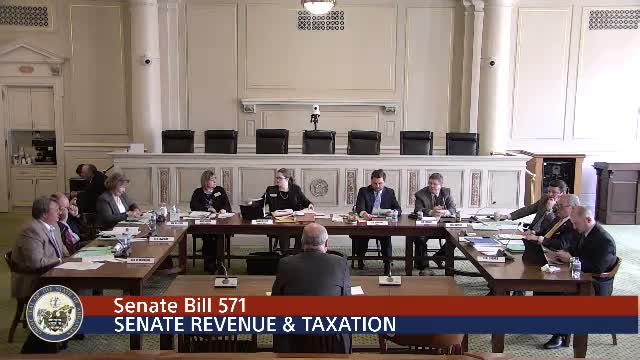
The Senate Revenue & Tax Committee on Dec. 6 approved Senate Bill 571 as amended, a broad tax package that pairs targeted income-tax reductions and an Earned Income Tax Credit (EITC) with higher cigarette and e-cigarette taxes.
Senator Hendren, who presented the bill, said the measure bundles “about 7 or 8 recommendations” from the tax reform task force and aims to modernize the state tax code while protecting general revenue. “This basically puts the EITC in place,” he said, describing a trust fund that will be seeded initially and used to deliver at least a 5% state EITC (a percentage of the taxpayer’s federal EITC) and other targeted tax relief.
Major elements of the bill include: a standard-rate reduction in the low-income table (eliminating a 2% bracket on the first band of income for taxpayers under roughly $22,200); an increase in the standard deduction to $3,300; creation of an EITC trust fund that initially funds a refundable EITC of at least 5% of the federal credit; a special excise tax of 20% on retail cigarette proceeds; and taxing e-cigarettes at parity with other tobacco products.
The sponsor said the measure is structured to be approximately revenue neutral over a three-year horizon by transferring an initial $55 million and a larger supplemental transfer in later years to offset expected declines in smoking and related sales-tax receipts. “This keeps the bill basically a 6,400,000 to the good over 3 years and that money would... be in the EITC trust fund for tax relief,” the sponsor told the committee.
Committee members pressed the sponsor and Department of Finance and Administration (DFA) staff on implementation details. DFA’s Paul Goring said rulemaking will be required to set procedures such as eligibility verification, whether federal disqualifiers apply, and how and when taxpayers are notified. "The taxpayer’s federal EITC amount will determine the Arkansas percentage applied," Goring said.
Republican senators raised procedural and policy concerns. Senator Garner questioned whether the process had been rushed and argued members needed more time to review fiscal-impact estimates. Senator Garner also asked whether Amendment 19 to the Arkansas Constitution would require a three-fourths vote; the sponsor said legal counsel advised the bill, as structured, does not require a three-fourths vote.
Public testimony split along predictable lines. Vape-shop owners and industry representatives warned a high wholesale/floor tax and a 67% effective tax rate on vaping products would force many small shops to close, risk job losses and push customers to online or untaxed sources. Bill McCullough, a Little Rock shop owner, said the wholesale/floor-tax language could require immediate large tax payments and urged a "do not pass" recommendation. Industry witnesses suggested alternatives such as a flat point-of-sale tax rather than a wholesale-floor approach.
Health-care witnesses supported the bill. Laura Marotte, an oncology nurse and president of the Little Rock Oncology Nursing Society, said the state’s high tobacco-use rate drives substantial Medicaid and productivity costs and argued taxes that reduce smoking would deliver long-term health benefits. "This bill can play a major role in reversing these trends," she told the committee.
On inventory and implementation concerns, the sponsor said the bill’s rules language directs DFA and tobacco-control authorities to include provisions ensuring current inventory purchased prior to the operational date will not be retroactively taxed; he said he will work to clarify any necessary amendments on the House side.
After debate and adoption of the sponsor’s amendment to adjust trust-fund transfers and protect general revenue, the committee voted to pass SB 571 as amended on a voice vote.