Get Full Government Meeting Transcripts, Videos, & Alerts Forever!
Get email alerts on the Tax Policy topic
No spam. Unsubscribe anytime.
Senate committee rejects bill to exempt coins, bullion and currency from sales tax
Summary
The Senate Revenue & Tax Committee heard testimony that exempting coins, currency and precious metals could spur coin shows, jobs and in‑state dealers, but DFA warned of a roughly $575,000 annual state revenue loss; the motion to pass the bill failed on a voice vote.
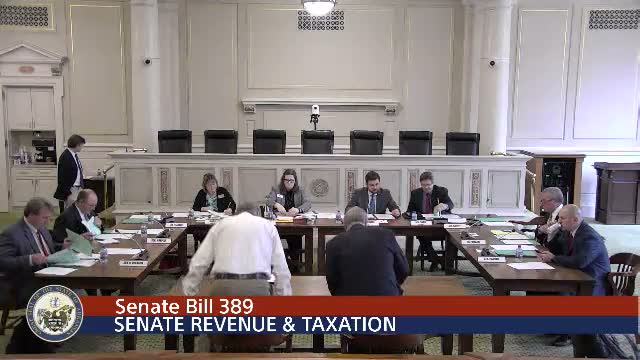
Senate Revenue & Tax Committee members voted down a proposal to exempt certain coins, currency and precious metals from Arkansas sales and use taxes after hearing competing fiscal and economic development arguments.
Senator Johnson, sponsor of Senate Bill 389, told the committee the bill is intended to attract dealers and coin shows to Arkansas by exempting items traded as investments — bullion, rare coins and currency — from sales and use taxes. Johnson said similar exemptions in other states have helped create a dealer industry and cited Michigan research and practitioner letters to argue the exemption could produce net revenue gains through increased local spending and payroll taxes.
Paul Gehring of the Arkansas Department of Finance and Administration told the committee DFA’s analysis shows a fiscal impact: an estimated $383,000 in lost state revenue for an eight‑month period and about $575,000 in a full 12‑month year, plus local sales tax losses. Gehring said the estimate used data from Indiana and reflected the likely immediate static loss absent any new economic activity.
Witnesses for the bill included Tom Poole, a Jonesboro coin dealer and president of the Arkansas Numismatic Society, who said a sales tax exemption would help Arkansas dealers compete with neighboring tax‑exempt states, attract large coin shows (he cited show sizes of 200–800 dealers in other states) and generate ancillary local spending on hotels, food and retail. JP Cortez of the Sound Money Defense League framed an exemption as restoring "sound money" treatment for gold and silver and noted many states already exempt such transactions. Local dealer Paul Mason said sales taxes sometimes prevent transactions from completing and deter entry by new buyers.
Committee members pressed proponents on distinctions between circulating coin (money) and collectible or bullion coins, on how mail‑order or depository holdings are currently taxed, and on whether the exemption would simply shift in‑state business to out‑of‑state depositories. Sponsor Johnson and witnesses said coins held in retirement accounts or held at out‑of‑state depositories are treated differently under federal tax rules and that the bill targets retail, in‑state commerce.
After debate that included proposals to phase in any exemption and concerns about budget impacts, Senator Rapert moved to pass the bill. The motion failed on a voice vote and the chair announced the bill did not pass and will remain on the calendar.
The committee record shows proponents argued the change would be an economic development measure, while DFA provided the principal fiscal counter‑estimate. No amendment or formal roll‑call tally for the vote was recorded in the transcript.