Get Full Government Meeting Transcripts, Videos, & Alerts Forever!
Get email alerts on the Workforce Training Center topic
No spam. Unsubscribe anytime.
TCL presents $26 million Arthur E. Brown workforce center, seeks roughly $1.3–$1.4 million to close funding gap
Summary
TCL representatives told the regional council they plan a 50,000–51,000 sq ft Arthur E. Brown Regional Workforce Training Center focused on IT, logistics and trades, with total costs near $26 million and a remaining funding gap of about $1.3–$1.4 million before state approvals can begin.
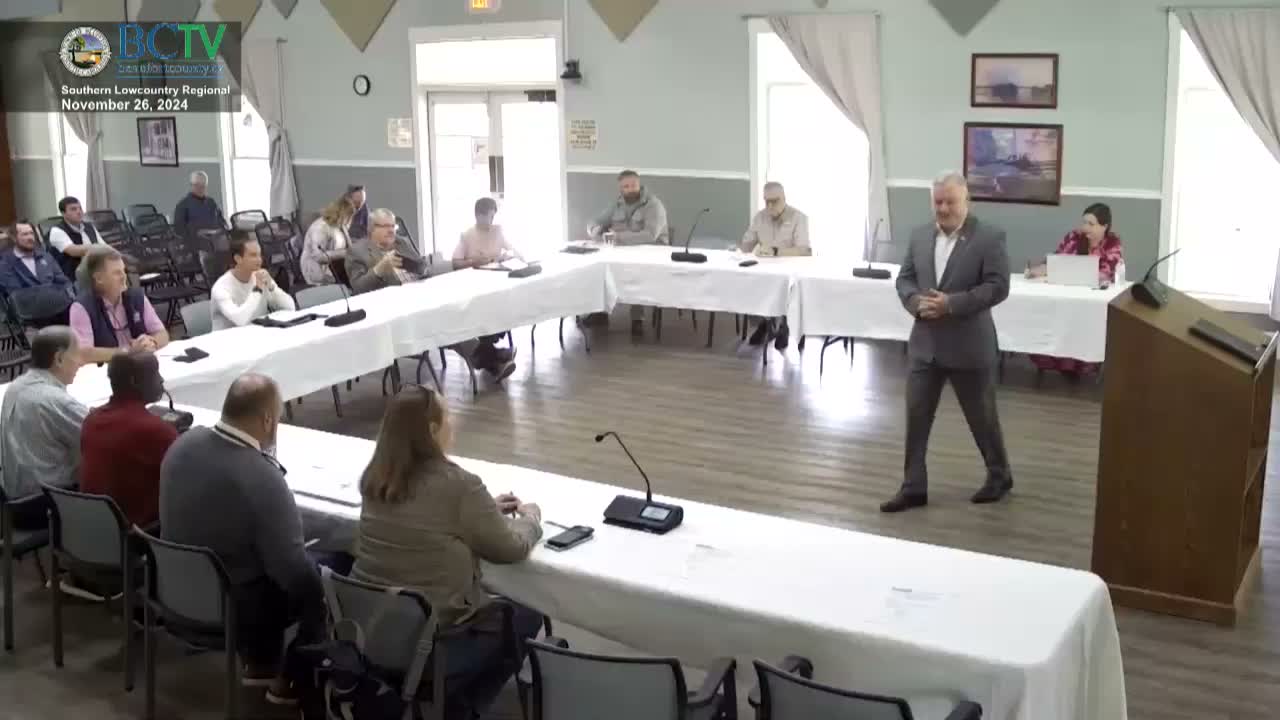
Rich Gough, speaking for TCL, told the regional council that the college plans the Arthur E. Brown Regional Workforce Training Center to expand training in IT, logistics, advanced manufacturing and traditional trades and to increase allied-health and cyber capacity.
Gough said the facility is about 50,000–51,000 square feet and, as presented to the council, carries an estimated construction cost of about $451 per square foot and a total project estimate of roughly $26 million, including about $2.5 million in program and equipment costs and roughly $23.5 million for construction. He told the board that a combination of local governments and state funding already covers most of that total but that TCL still must raise about $1.3–$1.4 million to meet conditions for the state’s Step 1 approval process.
"We can take somebody from minimum wage to $80 or $90,000 a year in about 12 weeks," Gough said, arguing the center will let TCL scale programs tied directly to employer demand. He also cited TCL’s high placement rate for graduates, saying roughly 96% of program completers find jobs in their field.
Gough presented enrollment and retention data intended to show local workforce impact: TCL’s enrollment was described at about 3,300–3,400 students, with recent semester growth (he cited ~6% increase for the current term and a ~13% trending uptick for the upcoming spring). He said roughly 90–92% of graduates remain in the Lowcountry service area (Hampton, Colleton, Jasper and Beaufort counties) and noted active-duty and veteran-affiliated students make up a meaningful share of the student body.
Board members and the public asked how TCL will coordinate with other institutions and meet employer needs. On dual enrollment and shared facilities, Gough said TCL and USCB sometimes compete for high-school students but can collaborate on bridges to four-year programs and on shared use of facilities such as hospitality training spaces on Hilton Head.
Public commenters asked about nursing output and tracking. Gough said TCL has had strong NCLEX pass rates for its nursing cohorts and that the college maintains gainful-employment tracking to monitor graduates’ employment outcomes, while acknowledging long-term alumni tracking has limitations.
Gough said TCL has run fundraising and ceremonial events, including a recent “chef’s table” to support culinary programs, and that the college expects additional state grant cycles and UDC grant applications to be part of the remaining fundraising effort. He asked the council for support in closing the $1.3–$1.4 million shortfall so TCL can begin the formal state approval and construction sequencing; he estimated about four years until the first cohort would graduate once the process and construction begin.
Next steps: TCL will continue fundraising, apply for state and UDC grants, and return with status updates; the council did not take formal action at the meeting.