Get Full Government Meeting Transcripts, Videos, & Alerts Forever!
Get email alerts on the Judgment Creditor Lien topic
No spam. Unsubscribe anytime.
Senate committee approves temporary lien on closely held LLC interests to preserve judgments
Summary
The Senate Insurance & Commerce Committee approved SB148, which places a temporary lien on ownership interests in closely held LLCs when a judgment creditor holds an existing judgment — intended to prevent rapid asset transfers while a court schedules a hearing.
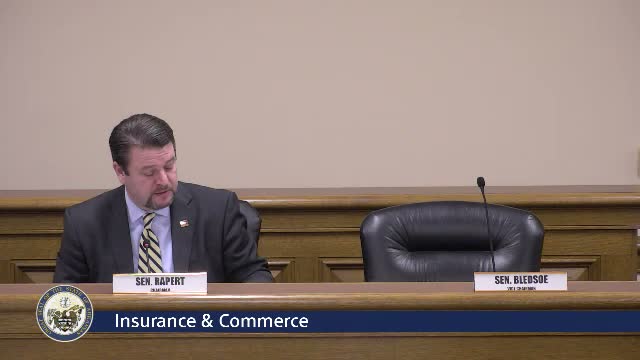
The Senate Insurance & Commerce Committee approved Senate Bill 148 after a brief presentation and limited questioning. Sponsor Senator Hester told the committee the bill would allow a judgment creditor to place a temporary lien on ownership interests in closely held limited liability companies (LLCs) so assets can’t be shifted out of reach while a court sets a hearing.
Hester illustrated the problem with an example of an individual who holds assets in an LLC to avoid satisfying a personal judgment. "All this does is puts a temporary lien on T Holdings until a judge can have a hearing," he said, explaining that the lien would remain in place only until a judge evaluates the underlying dispute and rules. If the defendant prevails, the lien would be removed; if the creditor prevails, the creditor may satisfy the judgment.
Committee members asked whether the lien amount is capped and whether the change applies beyond LLCs. Hester and committee counsel said the lien is limited to the amount of the debt and the bill targets LLC ownership interests rather than closely held corporations. Members also discussed existing remedies — such as post-judgment clawback litigation — and said the bill is designed to avoid prolonged asset-shifting during the typical 45–60 day window while a hearing is scheduled.
With no public testimony recorded, the committee moved to pass the bill. Senator Johnson moved the bill, Senator English seconded, and the voice vote carried. The chair announced the bill passed and said related transition items would be taken up at a subsequent meeting.
The committee’s action sends SB148 forward in the legislative process; the committee did not record further amendments to the substance of the lien mechanism during the session.