Get Full Government Meeting Transcripts, Videos, & Alerts Forever!
Get email alerts on the Public Records Data Formats topic
No spam. Unsubscribe anytime.
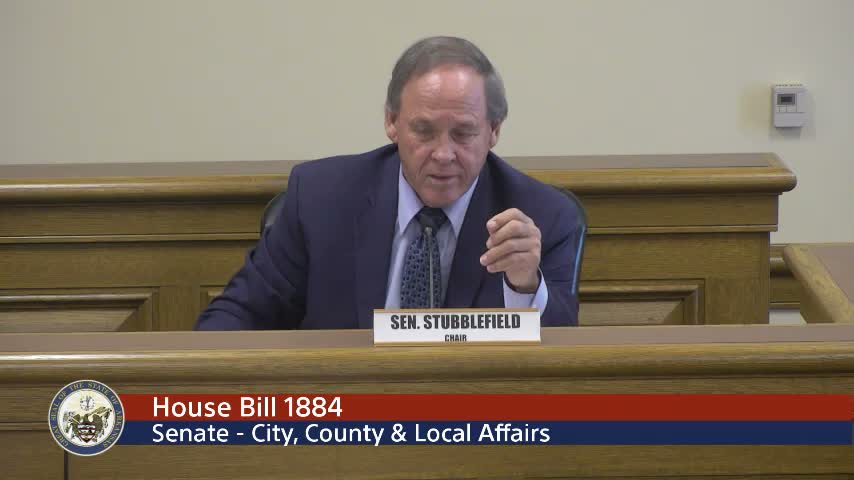
Committee debate over county data formats turns on software functionality and proprietary concerns; bill fails after amendment
Summary
House Bill 1884, which would require counties and their third‑party providers to make bulk public records available in commonly used file formats, drew contested testimony from vendors and tech firms over whether the measure would force disclosure of proprietary functionality. The committee adopted an amendment but ultimately did not pass the bill.
House Bill 18 84 was presented by Senator Dismain as a measure to create "uniformity and fairness" in county public‑record requests by simplifying the formats in which counties provide data and requiring third‑party providers to tell counties which export formats are available. The sponsor said the goal is to ensure public data are provided in usable file formats (for example, CSV, Excel) and to clarify that software providers need not create new storage formats on request.
Opponents, represented by counsel Marshall Nye of Bridal, Eldridge & Clark, testified that the dispute behind the bill centers on software functionality rather than raw data. Nye said the bill would allow a competitor to obtain another vendor’s functionality and described the measure as a ‘‘special interest bill’’ aimed at giving one competitor an advantage. He pointed to a long legal dispute dating to February 2014 and said the Arkansas Supreme Court had previously rejected related claims.
Alan Jennings, president of Apprentice (an Arkansas technology firm), told the committee that "all of the data belongs to the county" but warned that modern systems store data and functionality in proprietary databases; he said exporters routinely provide data in Excel or Access but questioned language in the bill that could be read to force disclosure of a vendor’s underlying technology stack or 'original format.' Jennings and vendor counsel also referenced source‑code escrow as a standard protection for counties.
Committee members pressed both sides on technical details, reverse‑engineering risks and which parts of the bill the amendment did or did not change. Counsel for opponents argued the amendment removed explicit language excluding redacted, proprietary or exempt data, which they said leaves vendors exposed. The sponsor responded the amendment clarifies the bill intends to require data exports in common file formats without forcing disclosure of proprietary manipulation or software code.
After committee discussion and a motion to pass the bill as amended (mover: Senator Clark; seconder: Senator Flippo), members debated whether separate commercial‑use or licensing issues remained unresolved. The chair announced the motion failed and said, "Senator Desmaine, your bill fails." The transcript records committee-level debate and voice votes but no roll‑call tallies.