Get Full Government Meeting Transcripts, Videos, & Alerts Forever!
Get email alerts on the Crimes Against Children topic
No spam. Unsubscribe anytime.
Arkansas State Police present Crimes Against Children quarterly report; longtime staffer Debbie Roark to retire
Summary
Major Jeff Drew and Debbie Roark briefed the committee on the April–June quarterly report: 1,533 reports investigated that quarter, a 34% substantiation rate on severe cases, and county‑level breakdowns. Roark announced her retirement; members thanked her for 38 years of service.
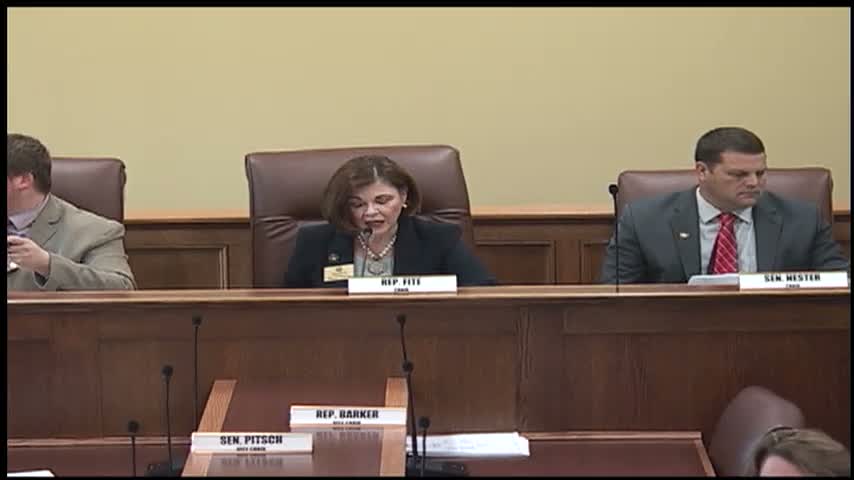
Major Jeff Drew and Debbie Roark presented the Arkansas State Police Crimes Against Children Division quarterly report covering April through June. Roark, who told the committee this would be her last meeting before retiring in December after 38 years of service, led the briefing with statistics and program details.
Roark said the division investigated 1,533 reports in the quarter and that the substantiation rate for the severe cases detailed in the report was approximately 34%. The report includes county‑level breakdowns, the distribution of cases by mandated reporter type and age, and a prosecutor referral section showing how many cases were forwarded to each judicial district and how many resulted in charges.
Committee members asked whether the mandated‑reporter list needs additions (Roark said it broadly covers people with routine child contact but expressed a policy preference for wider inclusion). Members also probed why many alleged offender relationships are logged as 'unknown'; Roark explained that callers are sometimes anonymous or children do not identify the offender, which limits classification.
Representative Burch asked about declinations by prosecutors and whether the division advocates further when cases are declined; Roark said prosecutors who participate early, for example at child advocacy centers, tend to produce higher prosecution rates and the division works to include prosecutors in multidisciplinary meetings.
Members thanked Roark for her years of service and applauded the incoming administrator who will join at the start of the next year.