Get Full Government Meeting Transcripts, Videos, & Alerts Forever!
Get email alerts on the Child Welfare Performance topic
No spam. Unsubscribe anytime.
DCFS quarterly report shows stable volumes but flags caseload strain and drop in 12‑month permanency
Summary
Director Michelle Martin told the Children and Youth Committee that SFY 2020 Q1 maltreatment report volumes and response timeliness were roughly stable but highlighted caseload pressure, a slight uptick in foster entries, and a decline in permanency within 12 months from 55% to 46%. Members asked for county breakouts and staffing remedies.
Michelle Martin, director of Children and Family Services at the Department of Human Services, told the Senate Children and Youth Committee that the Division of Children and Family Services’ quarterly performance report (Exhibit K) showed largely steady statewide measures but exposed local stresses in foster placement and casework capacity.
Martin explained the Exhibit K spreadsheets that break down hotline calls, accepted investigations, investigations found true, appeals and overturned findings by DCFS area and county. She said priority response times (Priority 1 = 24 hours; Priority 2 = 72 hours) remain about average compared with prior quarters, and the division served 5,296 children in in‑home cases at the end of the quarter.
Why it matters: committee members focused on operational and child‑outcome measures that drive oversight. Martin reported that neglect (51%) and parental substance abuse (45%) remain the most common reasons children enter foster care. She also told the committee there was a small first‑quarter increase in foster care counts, with numbers typically dropping again around the holidays.
A notable metric: Martin said the division’s measure for "permanency within 12 months" decreased from 55% to 46% in the most recent quarter. She also reported that re‑entries into foster care have declined to below the national average and that 457 children were available for adoption at quarter end.
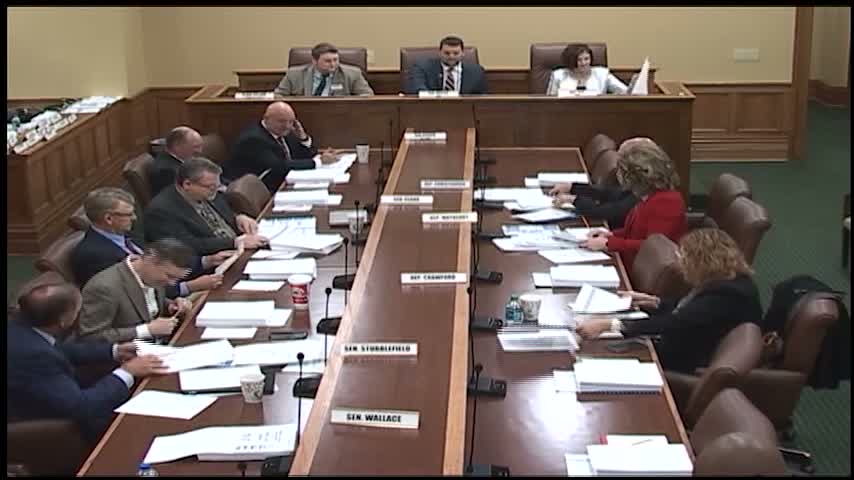
Members raised county‑level concerns. Representative Birch asked whether the caseload numbers include protective‑services visits as well as foster cases; Martin confirmed the caseload figure incorporates all case types and offered to provide a county‑by‑county breakout and a core monthly report that shows caseload makeup down to individual worker assignments. Senator Stubblefield asked whether high case counts correlate with poorer outcomes; Martin said they do and described mitigation steps including drawing on surrounding counties, a statewide assist (SWAT) team and other supports. She told the committee the division currently advertises 80–100 vacant positions and that counties with workers carrying caseloads in the forties are considered in crisis.
On sibling placements, Representative Richardson noted a decline in siblings placed together (page 14); Martin attributed that decline in part to an increase in new entries and initial placements and indicated the division is monitoring the situation and expects improvement next quarter.
The committee did not take formal legislative action on the performance numbers but asked for additional reporting detail. Martin emphasized that county caseload breakdowns (page 24) are essential context when evaluating statewide statistics.
What’s next: staff committed to provide the requested county breakouts and continued monitoring; the committee moved on to rule packets later in the agenda.