Get Full Government Meeting Transcripts, Videos, & Alerts Forever!
Get email alerts on the Child Protection Dcfs topic
No spam. Unsubscribe anytime.
DCFS and Crimes Against Children Division report steady permanency results but highlight hotline volume and county variations
Summary
Department of Children and Family Services presented quarterly performance metrics showing 7,455 accepted hotline calls (third quarter), a 23% substantiation rate on investigations, declining foster‑care population and permanency rates above national averages; the Crimes Against Children Division reported 68,072 hotline contacts in 2018 and discussed prosecution referrals.
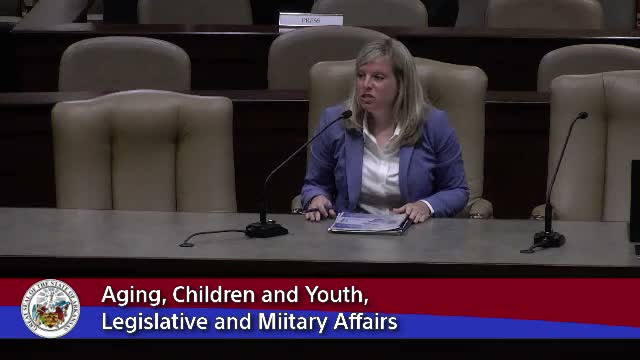
Director (identified in testimony as Ms. Martin) of the Division of Children and Family Services presented the committee with quarterly performance materials and an annual Family Preservation Services report.
Key DCFS figures: the third‑quarter quarterly performance report showed 7,455 accepted child‑abuse hotline calls, with investigations substantiated at about a 23% rate in the second and third quarters. Neglect remained the most common true finding. DCFS reported five true investigations involving child fatalities in the quarter covered.
Director Martin highlighted efforts to improve timeliness (priority 1 and priority 2 initiation windows), increase monthly in‑home visitation rates (reporting improvement to roughly 79% for monthly visits), and accelerate permanency outcomes. On foster care, the agency noted a continued decline in the number of children in care and that Arkansas’s permanency measures exceed national averages (for example, reunification and discharges to relatives/adoption combined exceeded the national benchmark cited in the report).
Martin also walked members through the overturned investigations report (a statutorily required Excel breakout by county), explaining how appealed true findings are reviewed and how few appealed investigations are overturned in most counties. The Division introduced a redesigned Family Preservation Services report with county appendices to let legislators examine local trends.
Major Jeff Jewell (Crimes Against Children Division, Arkansas State Police) presented CACD annual and quarterly data: CACD recorded 68,072 hotline contacts in 2018 with 38,849 accepted for investigation; for the reporting period CACD closed 5,936 CC cases with 2,063 found true (a 35% substantiation rate for those closed CACD cases). He also described the breakdown of allegations and the prosecution pipeline (cases submitted, declined, filed, pending).
Committee members asked whether DCFS could track referral source types (for example, school staff, hospital staff) and follow those referral sources through to substantiation outcomes; Martin said the agency does not regularly produce that cross‑tabulation but could pull specific data if requested. Members also asked whether DCFS can track outcomes for people who lose services and later appear in other Medicaid payment streams (for example, nursing home placement); Martin said some retrospective checks are possible but full tracking requires additional data work.
What happens next: Martin offered to provide additional County‑level extracts and said staff are available for follow‑up questions. Members thanked the Division and CACD for the report and moved on to planned oversight items.
Quotes from the hearing: "In the third quarter DCFS had 7,455 accepted calls," Director Martin said as she began the quarterly review.
"The hotline received 68,072 calls in 2018; there were a total of 38,849 accepted for investigations," Major Jeff Jewell said, summarizing CACD’s annual report.
Limitations: The report in committee was a summary presentation; members requested more disaggregated county‑level and referral‑source crosswalks for future oversight.