Get Full Government Meeting Transcripts, Videos, & Alerts Forever!
Get email alerts on the Medicaid Assessments Optum topic
No spam. Unsubscribe anytime.
Lawmakers fast-track review of Optum assessments after hundreds of Arkansas Medicaid beneficiaries lose services
Summary
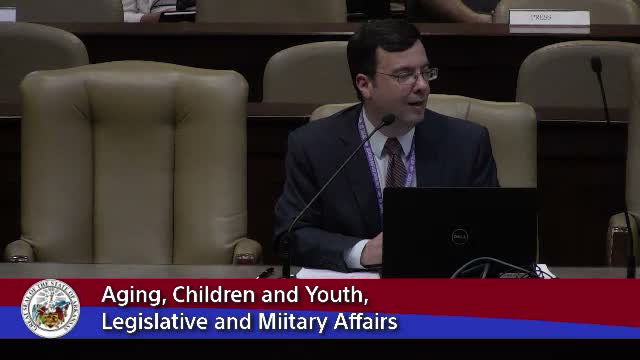
The Senate Children and Youth Committee heard that DHS’s switch to the ARIA independent assessment, administered by Optum, coincided with a spike in reassessments that found many assisted‑living and in‑home care beneficiaries ineligible; providers and family members testified to months‑long appeal delays and harm, and the committee voted to expedite a contract review.
Mark White, deputy director for the Division of Aging, Adult and Behavioral Health Services at the Arkansas Department of Human Services, told the Senate Children and Youth Committee that Arkansas began using the Arkansas Independent Assessment (ARIA) this year under a contract with Optum Healthcare Solutions. White said ARIA returns a tiered level of care used to determine eligibility for the Living Choices Medicaid 1915(c) waiver and related home‑and‑community‑based services.
White said the state saw a sharp increase in beneficiaries found ineligible after Optum began administering ARIA: about 44% of assisted‑living reassessments and roughly 31% of AR Choices reassessments were initially found ineligible. DHS identified 776 assessments for a quality re‑review (551 AR Choices and 225 Living Choices); as of White’s report the agency had re‑reviewed 287 of those and was conducting a systematic nurse‑led quality review intended to catch obvious errors and reinstate eligibility where appropriate.
"We began working on it, trying to address it, identify the cause, and also make sure that we made improvements that we needed to make," White said, describing additional Optum assessor training, staff changes, tweaks to the system’s tiering logic, and a new policy that DHS nurses will review every denial of an existing beneficiary.
Providers, case managers and family members told the committee the reassessments have caused serious hardship. Bethany Wilkins, a case manager with the Area Agency on Aging of Western Arkansas, said one rural couple lost services in March after an Optum assessment in January and remained without services while their appeal waits until December. "This is a year that these people are going on without services," Wilkins said.
Multiple providers reported high denial rates and long delays for appeals. Luke Mattingly, a provider executive, said his network saw a 35% denial rate in AR Choices assessments and that nearly half of affected clients had reduced service hours. Ed Holman, chair of the Arkansas Residential and Assisted Living Association, described discharges, scheduling failures, and instances in which facilities learned of denials only when DHS staff announced them.
Committee members pressed DHS on whether Optum had followed the contract and whether the vendor could be financially liable for extra DHS work. White said contract remedies exist but he could not recite specific clauses during the hearing and that any damages would be governed by contract provisions.
Members also asked how assessment determinations use outside records. White said assessors are required to consider medical records, caregiver input and provider documentation presented at the time of assessment, and DHS expects registered‑nurse assessors to observe and exercise clinical judgment rather than only ask scripted questions.
In response to testimony describing large numbers of denied or reduced services and lengthy appeal timelines, the committee passed a motion to expedite a review of the Optum contract and identify an August date to convene specifically to address the issues. The motion carried on voice vote, and the chair committed to coordinate with DHS to assemble the material members requested.
What happens next: White said DHS is continuing the QA reviews, will report back with reinstatement counts, and will provide committee staff with requested documentation. The committee directed staff to schedule the expedited contract review to examine Optum’s performance and DHS’s implementation of ARIA.
Quotes from the hearing: "We are now using a quality review process where we are reviewing every denial of an existing Living Choices or AR Choices beneficiary," Mark White said, describing DHS’s re‑review policy.
"These people are being denied. And they have no home to go to," Representative Douglas (public testimony) said, citing clients who sold assets after earlier eligibility determinations.
Committee action and formal direction: the committee voted to expedite a contract review with Optum and asked DHS to deliver documents and follow‑up counts on reinstatements and appeals.
Limitations and outstanding questions: DHS reported the number of reinstatements was not yet available and several witnesses said appeal hearings are scheduled many months out. Committee members asked DHS to provide detailed contract language and a timeline for when the office would produce reinstatement and appeal data.
The committee scheduled follow‑up oversight in August to review Optum’s performance, DHS’s QA findings and whether contract remedies or contractual changes are warranted.