Get Full Government Meeting Transcripts, Videos, & Alerts Forever!
Get email alerts on the Child Protection topic
No spam. Unsubscribe anytime.
DCFS annual report: 34,226 hotline calls, 33 maltreatment deaths found true; agency highlights timeliness and permanency push
Summary
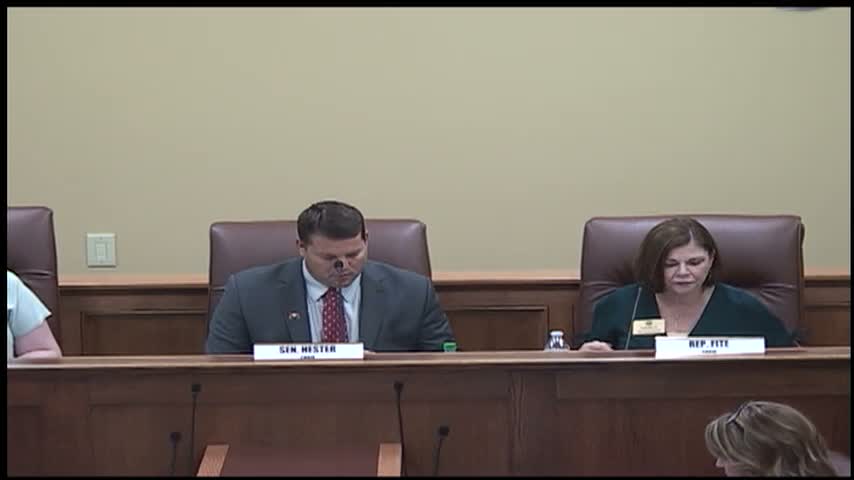
Misha Martin, director of the Division of Children and Family Services, told the Senate Children and Youth Committee the division fielded 34,226 hotline calls (about 20,800 assigned to DCFS), saw 24% of investigations found true and reported 33 maltreatment-related child fatalities. Martin highlighted improved timeliness and a permanency initiative to finalize 285 adoptions by November.
Misha Martin, director of the Division of Children and Family Services, presented the division—s annual report card to the Senate Children and Youth Committee, reporting that the state—s child abuse hotline received 34,226 calls in the reporting year and that roughly 20,800 of those were assigned to DCFS. "Once those calls are accepted, they either go to a traditional investigation route or to what we call differential response," Martin said, describing how cases are triaged.
Martin said the division—s combined true-findings rate for maltreatment investigations was about 24 percent and that investigators returned 33 true findings of child fatality and one near-fatality in the year covered by the report. "We had 33 true findings and 1 near child fatality true findings," she said, directing members to a detailed appendix with individual-case summaries and preliminary causes of death.
On timeliness, Martin reported that initiation targets are improving: some investigations must begin within 24 hours, others within 72, and the division—s combined initiation rate was 84 percent. She said differential response cases (the lower-severity track) numbered about 6,005 and that timely initiation and closure of those cases remains a challenge; the division recorded roughly 70 percent timeliness on differential-response initiations for the year.
Martin also reviewed in-home services and foster care trends. At a point-in-time count, DCFS was serving 5,396 children in in-home cases and reported a decline in foster-care population driven by both fewer removals and more timely discharges. Reunification remained the most common discharge outcome (41 percent), followed by adoption (28 percent). The division has launched a "permanency focus" initiative and is working to finalize 285 adoptions by November, Martin said.
The report addressed placement stability and sibling placement. Martin said sibling placement has improved and that the division regularly pursues space waivers from the child-welfare licensing board to keep large sibling groups together; she asked legislators to flag constituent cases for follow-up when placement or waiver decisions raise concerns.
Martin highlighted adoption subsidy figures and budget implications. "Of those 884 children who began receiving adoption subsidies, 878 were federally funded and 6 were state funded," she said, noting that DCFS must match federal subsidy dollars and that adoption subsidies account for a substantial portion of the division—s monthly payments.
Committee members raised several follow-up requests. Representative Mayberry asked whether the spike in child fatalities late in the fiscal year is unusual; Martin said she would provide prior-year comparisons from earlier annual reports. Representatives also asked for more detail on the preliminary causes of death (Martin pointed to appendix charts and offered case-level materials to legislators consistent with legal release rules) and for conversion statistics showing how frequently cases classified for differential response are later upgraded to full investigations (Martin said those pulls exist and can be provided).
Senators and representatives pressed Martin on county-level caseload variation and vacancies. Martin said the division monitors staff vacancies weekly and can provide vacancy counts by county; she described using a statewide assessment team and extra-help positions to support counties experiencing sudden staff losses.
The committee accepted the report and asked the division to provide the requested county vacancy printout, historical fatality comparisons, and conversion statistics for differential-response cases.
The committee did not take any further action on policy at the meeting; Martin—s presentation concluded with an offer to provide additional data and appendices referenced throughout the report.