Get Full Government Meeting Transcripts, Videos, & Alerts Forever!
Get email alerts on the Planning Process topic
No spam. Unsubscribe anytime.
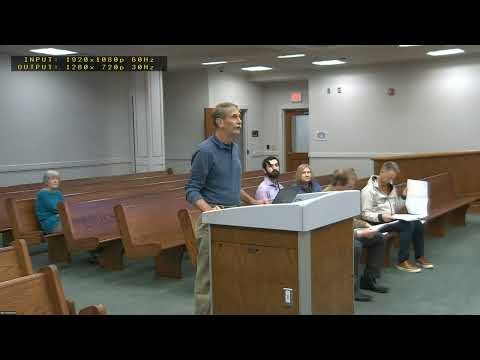
Beaufort board debates process changes after court ruling on vested approvals
Summary
Board members and staff debated whether recent court rulings that treat conceptual and preliminary approvals as vested rights require changes to the city's review sequence, with staff proposing work‑session review for major projects and board members split on risks to owners and public oversight.
City staff presented a letter and brief to the Historic Review Board explaining that a recent court ruling in Beaufort interpreted concept, preliminary and final approvals as separate vested actions, creating potential legal complications for multi‑stage project reviews.
Staff recommended caution and proposed moving major projects toward an earlier work‑session format (nonbinding discussion without a formal decision letter) so that binding approvals would occur at final review only. A staff speaker summarized the court’s reasoning and said the ruling increases exposure to legal challenges when concept or preliminary approvals are treated as vested rights.
Board members were divided. One member argued the court’s ruling protects owners who invest thousands of dollars in design and engineering: “If you expend thousands of dollars...and the board gives you a conceptual approval, then eight months later, after more study and a change of membership, you lose that approval, that screws over the homeowner,” another member said. Others urged code changes so that the conceptual/preliminary/final steps — and their legal effect — are explicitly codified by council.
Several board members also said the Technical Review Committee and the Historic Technical Review Committee had already reduced surprises by resolving many code and site issues before final review, and that going to work sessions for every major project could prolong the process. The conversation concluded with staff committing to return with code recommendations and the board agreeing to proceed cautiously with conceptual approvals until any code changes are adopted.
What happens next: staff will prepare suggested code clarifications and present recommendations to the board and city council to address vesting and process fidelity.