Get Full Government Meeting Transcripts, Videos, & Alerts Forever!
Get email alerts on the Green Crescent Trail topic
No spam. Unsubscribe anytime.
Volunteer group outlines 25–30‑mile Green Crescent Trail plan to link Clemson, campus and nearby towns
Summary
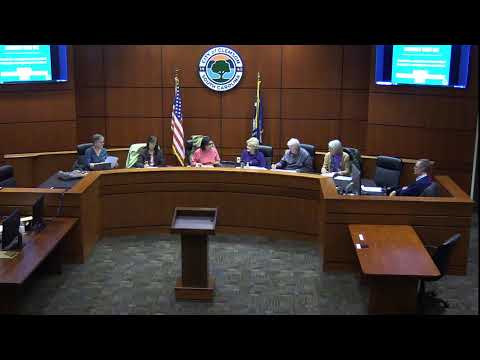
At a Clemson Sustainability Committee meeting, Chad Carson, a founding member of Friends of the Green Crescent Trail, described completed segments, near‑term projects on Berkeley Drive and Nettles Park, and a 5–10 year vision that could total about 25–30 miles of connected trails.
Chad Carson, a founding member of Friends of the Green Crescent Trail, told the Clemson Sustainability Committee the group’s long‑term aim is to knit parks, neighborhoods and campuses together with a network of safe walking and biking routes.
Carson said the nonprofit, formed in 2014–2015, has completed a roughly three‑mile Phase 1 connection that links Clemson Elementary, Clemson Park, Gateway Park and portions of the Clemson University campus and the South Carolina Botanical Garden. “We could have about 25 to 30 miles of trails that would be included in this network called the Green Crescent Trail,” he said during the committee’s meeting.
The group described two near‑term projects as likely next steps: a south‑corridor connection on Berkeley Drive — which Carson said is a state Department of Transportation road with enough easement space to accommodate a green strip and a 10‑foot path — and a segment tying Tati’s Place to Nettles Park that depends on private easements. Carson told the committee one privately owned property on the proposed route was marketed at roughly $350,000; he said the South Carolina Conservation Bank had been involved in grant discussions that would cover about 50 percent of a purchase, and that the city ultimately acquired the parcel and plans to preserve it as green space.
Carson framed the project as both transportation and recreation. He said the trail network could reduce short car trips, improve public health and provide economic benefits similar to other regional trails. “If you look at Traveler’s Rest… hospitality tax was roughly $200,000 a year before the Swamp Rabbit Trail and rose to $800,000–$1 million after,” he said, noting such trails can spur downtown activity.
He also outlined design choices: connections may be sidewalks, protected bike lanes, multi‑use paved paths or natural‑surface trails depending on location and budget. Conversely, high‑cost corridors such as a fully protected Highway 93 side path would likely require multimillion‑dollar state or federal funding or local matching dollars.
Carson asked the sustainability committee to continue prioritizing the trail in its recommendations to city council, and to provide feedback and help with visuals, outreach and grant advocacy. He said the nonprofit has a volunteer board of about 11–12 people and an email list of several hundred supporters and offers guided walks and volunteer workdays for members.
Committee members asked about walking and signage; Carson pointed to Clifton Park and Gateway Park as good trailheads, said seven kiosks with maps are installed in parts of the network, and offered contact information for residents wanting tours or to volunteer. He also said the city currently allocates about $200,000 per year toward the Green Crescent Trail in its general budget.