Get Full Government Meeting Transcripts, Videos, & Alerts Forever!
Get email alerts on the Land Use Foster Creek Pud topic
No spam. Unsubscribe anytime.
Hanahan council advances Foster Creek PD amendments after heated public hearing
Summary
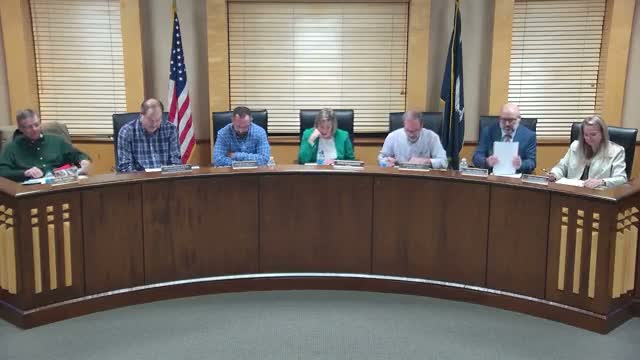
After a lengthy public hearing Dec. 10, the Hanahan City Council approved the introduction and first reading of amendments to the Foster Creek Village planned-development ordinance to clarify which city standards apply and to resolve longstanding ambiguities; several council members voted no and the council voted to pursue mediation with the developer.
Hanahan, S.C. — The Hanahan City Council voted Dec. 10 to introduce and give first reading to amendments to the Foster Creek Village plan-development (PD) ordinance intended to clarify ambiguities in the PD and confirm that the city’s 2008 zoning and land-development regulations apply where the PD is silent.
The amendments, presented by regional planners and the city’s outside counsel, do not propose changes to densities, setbacks or substantive development rights, city attorneys said. Ross Appel, legal counsel for the city, told council that the updates are “a scalpel” to make the PD administrable and to bring it into conformance with state law. “PDs are just zoning ordinances,” Appel said during his presentation, arguing the changes will reduce decades of litigation over conflicting code references.
Why it matters: The Foster Creek PD has been a lightning rod for disputes between the city and the property owner for years. The proposed housekeeping changes would resolve which edition of local ordinances controls in ambiguous situations, clarify road standards and update acreage and appendix references — matters city staff and counsel said are necessary to prevent future legal exposure and to allow projects within Bowen to move forward.
Opposition from the developer and residents: The property owner and representatives contested the city’s legal interpretation in several extended public remarks. A speaker identified in the record as Ray (transcript variants include “Ray Rand” and references to “Mr. Wren”) argued the PD was properly adopted under earlier procedures and said the owner has relied on vested rights. Ray told council he believed proceeding would prompt litigation, at one point saying, “We’re gonna sue because we know we’re right.” Residents on both sides of the issue also addressed the council: some urged stronger buffers and updated traffic studies, while others urged the council to approve amendments to enable housing and mixed-use development.
Council vote and next steps: Council voted to approve the public-hearing introduction and first reading of ordinance 15-2024. The roll call recorded several 'no' votes: Councilmembers McCrawley, Spurlock and Colvin registered opposition; other members voted aye. After the vote, council adopted a separate motion directing city staff and the city’s legal team to “wholeheartedly propose” mediation with Foster Creek Village and the property owner to attempt a negotiated resolution. That mediation motion passed on a roll-call vote.
What the amendments do and do not do: According to the planners and legal advisers, the proposed changes (1) default unspecified technical standards to the city’s 2008 code where the PD does not address an item, (2) update acreages and cross-references, and (3) clarify road-width and approval-process language so staff and future owners understand procedure; they stressed that the package is not intended as a downzoning or to remove substantive entitlements.
Claims and responses recorded in the hearing: Developer representatives argued the city improperly rejected the developer’s proposed PD submission and that Foster Creek’s approvals and investments create vested rights under state law. City counsel and planners countered that several provisions submitted by the developer (including language that would allow unilateral acreage expansion and a private third-party review process that would sidestep municipal review) were inconsistent with state law and therefore could not be accepted in the form submitted.
What’s next: The measure has passed the introductory and first-reading step; by practice the PD amendment will return to council for additional readings and potential amendments after further review and any negotiated outcomes from mediation. The council’s directive to pursue mediation signals an effort to settle technical and legal disputes outside of litigation before additional legislative action.