Get Full Government Meeting Transcripts, Videos, & Alerts Forever!
Get email alerts on the Board Votes topic
No spam. Unsubscribe anytime.
Board approves consent agenda, multiple MOUs, contracts and calendars
Summary
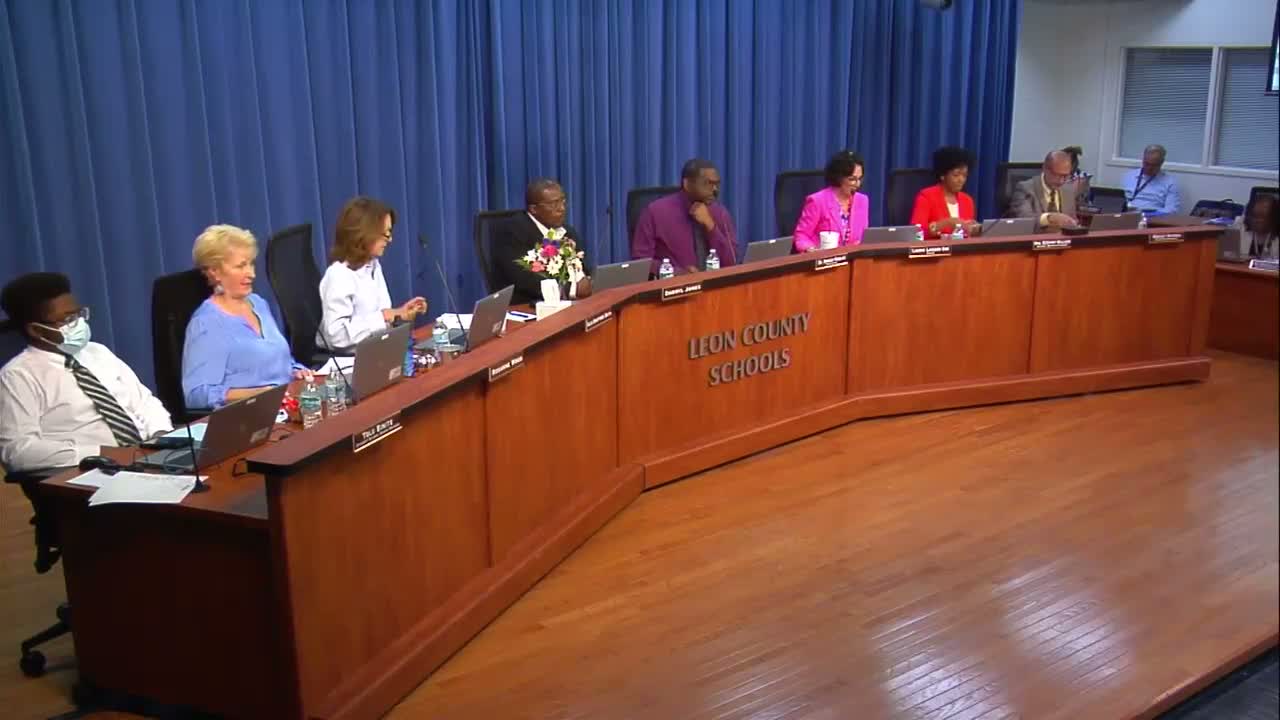
At the March meeting the Leon County School Board approved the consent agenda and a suite of policies, MOUs, procurement awards and the revised 2024–26 calendars; most items passed unanimously with little debate and several were described as routine or part of prior workshops.
The Leon County School Board approved a broad slate of agenda items in a series of mostly unanimous votes during its March 2025 meeting. Highlights include:
• Consent agenda: Board approved the consent agenda without speakers and with a unanimous vote.
• Remote-work policies (items 19.01–19.03): The board approved new policies 1,500; 3,500; and 4,500 (effective 03/26/2025) following prior workshop review.
• MOUs and employee benefits: The board approved multiple memoranda of understanding with the Leon Educational Staff Professional Association (LESPA) and others, including EDEP assistant manager pay grade, employee family coverage, a sick-leave buyback trial, a five‑day paid parental-leave pilot, and employee childcare-assistance provisions intended to support recruitment and retention.
• Procurement and continuing contracts: The board authorized a purchase order to North Florida Asphalt Inc. for Buck Lake Elementary parking improvements and extended the third-year renewal for CSI Contracting Inc. under a continuing-contract arrangement (project-specific millwork for Godby flood repairs). The board also approved a reroof procurement for the Athletics Maintenance Building No. 3 (Southland Row Roofing Inc.).
• Facilities and calendars: Trustees approved verification of the Florida Inventory of School Houses (FISH) facilities data, a Riley Elementary rezoning survey, submission of the tentative five‑year facilities work plan to the Florida Department of Education, and revised 2024–25 and 2025–26 calendars with added "just-in-case" hazardous-weather makeup days and a one-day adjustment for seniors.
Most items were presented as routine or as the product of prior bargaining and workshops. Board members emphasized communicating benefit changes to staff and the public and returning with detailed procedures where appropriate.