Get Full Government Meeting Transcripts, Videos, & Alerts Forever!
Get email alerts on the Mental Health topic
No spam. Unsubscribe anytime.
Merriam honors Johnson County co‑responder program as city proclaims National Co‑Responder Week
Summary
Mayor Bob Pate proclaimed Sept. 15–20, 2024, National Co‑Responder Week in Merriam and recognized the Johnson County Co‑Responder program. Jessica Murphy of Johnson County described program growth — from two Merriam responses in the first year to more than 230 last year — and credited local partnerships for diverting people in crisis from arrests and hospitalizations.
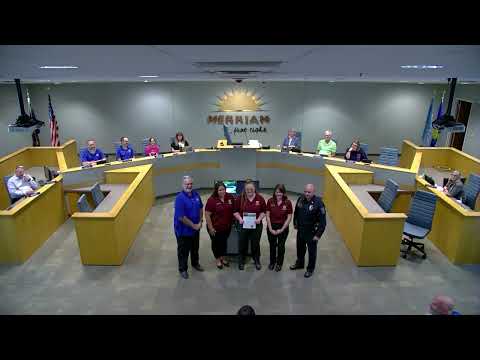
Mayor Bob Pate read a proclamation at the Sept. 9 Merriam City Council meeting recognizing National Co‑Responder Week and praising Merriam’s partnership with the Johnson County Mental Health Center co‑responder program. The proclamation notes Merriam joined the county’s Northeast co‑responder partnership in 2017 and that the county program, launched in 2011, now has 21 co‑responder positions and partnerships with 15 law enforcement agencies.
Jessica Murphy, deputy division director for emergency services at Johnson County Mental Health Center, accepted the proclamation on behalf of the center and Merriam Police Department. Murphy said the Northeast program’s response activity in Merriam grew from two calls for service in its first year to more than 230 responses last year. She described follow‑up outreach for nearly every citizen with a police contact for behavioral‑health concerns — nearly 1,000 follow‑ups in Merriam since February 2017 and more than 3,000 across the Northeast program — and credited the city’s budget support and police leadership for expanding the service.
Murphy said the program’s goals include diverting individuals in crisis from the criminal justice system and connecting them to appropriate behavioral‑health care, which she said has reduced arrests and hospitalizations in many cases. She also read two citizen compliments submitted to the program, including an account in which a resident said a co‑responder visit “saved me yesterday.”
The council and mayor presented the proclamation to program representatives at the meeting and thanked the team for the partnership.
The proclamation does not create policy or funding changes; it was ceremonial recognition of an existing intergovernmental partnership. The council did not take a formal vote tied to new funding during the meeting.