Get Full Government Meeting Transcripts, Videos, & Alerts Forever!
Get email alerts on the Single Hauler topic
No spam. Unsubscribe anytime.
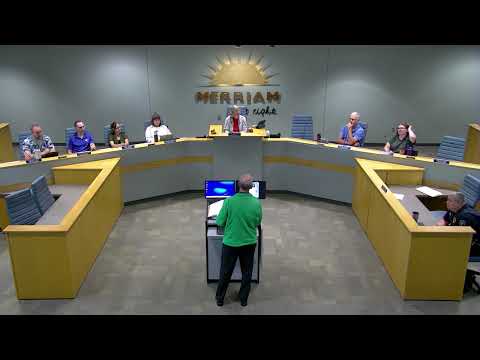
Merriam council hears public concerns and support as staff previews single‑hauler trash plan
Summary
City staff held a public hearing on a statutory ‘resolution of intent’ to organize solid‑waste collection under a single‑hauler model; speakers split between anticipated cost savings and concerns about loss of choice, enforcement, and implementation details. Council will consider the resolution Oct. 14; no vote tonight.
City staff opened a public hearing on a Resolution of Intent to consider organizing trash, recycling and yard‑waste collection under a single‑hauler model, emphasizing no decisions would be made at the meeting and many program details remain unresolved.
“We don't know what the price is going to be. We don't know what the container size is going to be,” a staff presenter told the council, stressing the presentation was meant to solicit public input and start a statutory process that includes a 30‑day notice period and further hearings if the council approves the resolution of intent. Staff said the funding mechanism would most likely be a solid‑waste fee assessed on the property‑tax bill if the city proceeds.
Supporters at the microphone argued consolidation would reduce truck traffic, noise and emissions and could lower household bills. “Less than half of what I’ve got,” said one resident who compared his current bill of about $436–$504 a year to neighboring cities that pay roughly $190–$230 annually.
Opponents warned that a single contractor could create service vulnerability and limit competition. A resident who cited a Prairie Village fine against a major hauler asked how Merriam would measure contractor performance and enforce pickup standards. Another speaker pointed to a draft budget line—$95,000 cited by a speaker—as a potential hidden cost to administer a citywide program and asked whether residents would be able to opt out.
Staff outlined the next steps and time line: the council is scheduled to consider the resolution of intent at its October 14 meeting; if adopted, staff would develop an Organized Collection Service Plan and hold a second public hearing on Dec. 9 before issuing an RFP. State statute also creates an 18‑month window for implementation that staff said would be counted from contract acceptance, potentially placing full single‑hauler service in late 2026 if the city proceeds.
Staff recommended convening a community committee to help develop the collection plan and promised more detailed answers on costs, container sizes, billing and enforcement once the RFP and contract documents are drafted.
The council did not vote on the resolution during the meeting; staff and council encouraged continued public comment through the city’s dedicated web page and feedback form.