Get Full Government Meeting Transcripts, Videos, & Alerts Forever!
Get email alerts on the Business Regulation topic
No spam. Unsubscribe anytime.
Ottawa commission delays action on ordinance to license massage establishments after practitioners raise fee and training concerns
Summary
City staff presented a proposed ordinance to license massage establishments and therapists, citing public-safety inspections and background checks; practitioners warned proposed education and fees could burden small local providers and commissioners agreed to postpone the item to Nov. 20 for more study.
A proposed Ottawa City ordinance to license and regulate massage establishments and massage therapists received detailed staff explanation and public comment on Nov. 6, and the city commission agreed to continue the item to its Nov. 20 meeting to gather additional information on fees, training and grandfathering.
City staff member Frank Finch told the commission that Ottawa currently "has no provision in its city code for legitimate massage therapy establishments" and that the draft ordinance would create a separate regulatory framework. He said the ordinance splits the rules into sections for establishments (sections 1–20) and individual therapists (sections 21–28), and would remove massage from the city’s adult-business rules (sections 29–30). Finch said the ordinance draws on models from Overland Park and Gardner and is intended to ensure sanitary premises, inspections and background checks so services remain "legitimate and above board." (Quote attributed to Frank Finch.)
The draft ordinance would require inspections under section 7 (cleanable, washable wall finishes; sanitary laundry and single-use coverings where used), background checks coordinated with police, and local licensure activity handled by the city clerk. Staff described a grandfather clause: individuals practicing as massage therapists on the ordinance’s effective date would have 90 days to present evidence of prior practice and could be licensed without meeting the proposed education and testing provisions, though CPR training and license fees would still apply.
Staff also described a proposed fee structure (to be set by resolution) that, as presented in the packet, would set a $200 establishment license and a $50 permit; Finch said that figure is lower than the current adult-business establishment fee and below the $300 fee charged in Overland Park and Gardner, and that the fee was calculated to reflect the regulatory burden of inspections, background checks and clerk work.
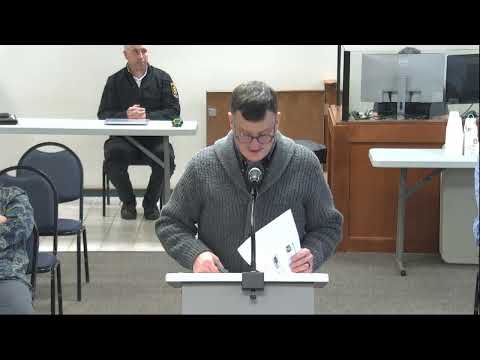
Local practitioners urged caution. Guy Silverson, identifying himself as co-owner of Graceful Touch Massage Therapy in Rapid City, said he and a partner hoped to open a satellite practice in Ottawa and asked staff to help shape rules that would allow professional medical massage to operate locally.
Longtime Ottawa therapist Becky Schisler, who said she has practiced since 1994, urged the commission to consider the cost to small, part-time practitioners. "I don't think that we need all the regulations to do that," she said, describing the expense of schooling, continuing education and room rents in a small market.
Robert Bowers, who described more than 20 years of local practice, said he was surprised by the new requirements and urged the commission to reconsider proposed testing and continuing-education burdens. "You're requesting them to do another 12 hours, which is ridiculous," he said.
Commissioners asked staff about parallels in other Kansas cities, inspections of downtown buildings with a limited number of restrooms, and whether home-based or chair massages would be permitted. Finch said the draft allows home-based, service-oriented businesses and chair massages (above-the-waist) and that inspectors will look for sanitary conditions only; he emphasized the ordinance focuses on the massage portion of any business, not unrelated salon or medical services.
After questions about enforcement, local comparators and grandfathering, commissioners expressed broad support for removing massage from the adult-business code but signaled concerns about fee levels and education requirements. The commission agreed to set the ordinance for further consideration at its Nov. 20 meeting to allow staff to provide additional comparisons and information. A formal vote on adoption was not taken the night of the presentation.
What happens next: staff will return with additional comparative data and fee options ahead of the Nov. 20 meeting; the commission has the option to amend the ordinance text or the fee resolution before final action.