Get Full Government Meeting Transcripts, Videos, & Alerts Forever!
Get email alerts on the Economic Development topic
No spam. Unsubscribe anytime.
Ottawa Commission authorizes sale of Proximity Park to Lightfield Energy LLC
Summary
The commission voted to authorize finalization and execution of a $5,000,000 purchase-and-sale agreement with Lightfield Energy LLC for Proximity Park, including a 180-day due-diligence period and a tax-abatement request capped at 75% for 10 years. Lightfield says the project will house a technology campus and power plant to support large data and AI users.
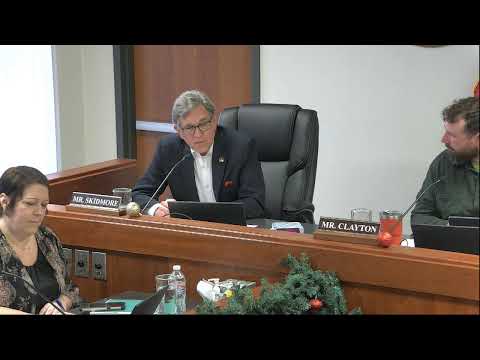
The Ottawa City Commission on Dec. 18 authorized city leaders to finalize and execute a purchase-and-sale agreement to sell Proximity Park to Lightfield Energy LLC, approving a $5,000,000 contract with a 180-day due-diligence window and terms that limit any tax abatement to no more than 75% for 10 years.
City Attorney Paul Finch presented the action as a newly added agenda item, saying staff had finalized a draft agreement and invited principals Andy Talbert and Billy Sorensen to describe Lightfield’s plans. Lightfield described the proposal as a combined technology campus and on-site power plant intended to serve large data centers and AI computing workloads. Company representatives said Lightfield has operated for about 15 years in the energy space and has built projects across the country.
Why it matters: commissioners and staff said Proximity Park’s readiness—its land assemblage and infrastructure—made the site attractive for a project that requires substantial, stable power. City Attorney Finch said the development agreement and incentive package will go through the city’s standard review and that bond counsel would analyze appropriate incentives.
Key details: Finch told the commission the purchase contract is for $5,000,000 and includes a 180-day due-diligence period. The draft limits Lightfield’s maximum tax abatement request to 75% for up to 10 years; Finch said Lightfield wanted immediate contribution to the tax base rather than a 100% abatement. Lightfield estimated initial permanent employment around 100 people in phase one, with the possibility of 200–300 jobs as the campus grows; construction jobs would be substantially higher in the short term. Company representatives said baseline on-site power generation would be natural gas, though Lightfield’s broader portfolio includes renewable energy and it may incorporate renewables where feasible.
Commission debate and vote: commissioners asked about comparable projects, job pay ranges, partnerships with local schools and workforce development, and timing for turning dirt. Lightfield said approvals could be obtained within roughly a 100–180 day approvals window and that the company hoped to break ground once approvals were complete. After a motion and second, the commission approved the authorization by roll-call vote; the motion carried unanimously.
Next steps: staff said the city will proceed with a development agreement and further incentive analysis. Bond counsel and city staff will complete due diligence during the contract period; if the sale closes, the city will process any incentive requests under the development agreement and applicable review standards.