
Lehi council hears hours of testimony on proposed central school district; residents urge ballot measure
Get AI-powered insights, summaries, and transcripts
Subscribe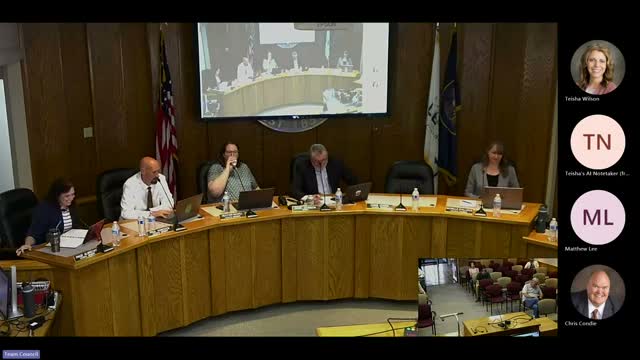
Summary
Lehi City Council held a lengthy public hearing on a proposed interlocal to form a new central school district. Dozens of residents and school-board members urged council to put the question on the ballot, while some raised concerns about boundary choices, bond funding for West-Side growth and representation. No formal ballot-placement vote is recorded in the transcript.
Lehi City Council opened a public hearing July 23 on whether to join an interlocal agreement that would help create a new central school district carved from Alpine School District. Dozens of residents, teachers and local board members urged the council to let voters decide whether the district split should go on the November ballot.
Supporters spoke repeatedly about local control, representation and the practical difficulty of passing bonds in the very large Alpine district. Julie King of Saratoga Springs described the interlocal as “a collaborative experience” and said she supported placing the measure on the ballot to let residents decide. John Madsen, speaking for applicant interests on a separate agenda item earlier, returned during the hearing to say he favored both taking the question to voters and a split so local communities could manage growth. Several school-board members, including Stacy Bateman, said they supported putting the interlocal on the ballot and praised city staff and council for studying the issue.
Opponents and cautious speakers raised financing and equity concerns. Lisa Cook, who lives on Lehi’s West Side, said rapid housing growth there means the area will need school funding and worried that proposed boundaries and the interlocal might not secure sufficient funding for future schools. Several speakers flagged a broader fiscal problem documented to council staff: projected deficits in other parts of Alpine School District that could affect bond strategy and capital projects.
Councilmembers framed the decision as a balance of fiscal and representation priorities. Councilmember Paul said a recurring bond failure and perceived mismatch between where votes reside and where capital needs are concentrated persuaded him the three-way split and a central district would better align taxpayers and students. He and other councilmembers cited studies (MGT and a follow-on LRB analysis discussed at council meetings) that compared tax and capital needs across proposed configurations and concluded a central district could offer more local representation while moderating tax impacts. Councilmember Paige — and one member with teaching experience — said concerns about classroom services and teacher retention were central to their analysis; she described weighing both fiscal and student-service impacts before supporting a ballot referral.
Councilmembers stressed that if the interlocal and the split pass, the next critical step would be electing a school board to set policy, hire a superintendent and determine capital priorities. The council took a nonbinding show of hands from the audience indicating substantial public interest in taking the question to voters, but the transcript contains no recorded formal council motion or roll-call vote authorizing ballot placement during this meeting. The record shows the council intends continued public engagement and further procedural steps if interlocal partners agree to advance the measure.
The hearing concluded without a formal ballot-placement vote recorded in tonight’s minutes. The council adjourned after routine final business.