Get Full Government Meeting Transcripts, Videos, & Alerts Forever!
Get email alerts on the Budget Arpa topic
No spam. Unsubscribe anytime.
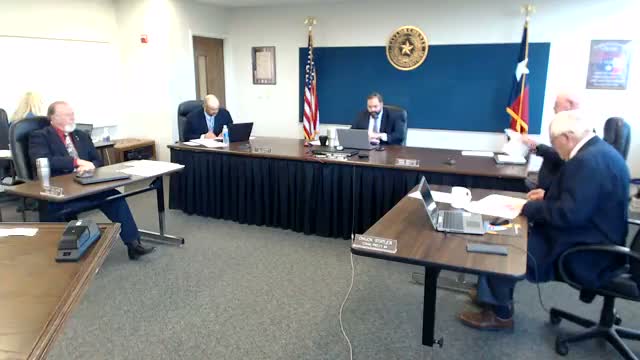
Taylor County discusses ARPA timing, proposes $500,000 interest transfer to fund juvenile residential treatment
Summary
The Commissioners Court discussed ARPA deadlines and proposed using $500,000 of ARPA interest to cover juvenile residential treatment needs now while moving a larger fiber project to a later funding vehicle; staff outlined obligation rules and timing risks for bids and contracts.
The Taylor County Commissioners Court spent its longest discussion on FY2025 budget items and the county’s American Rescue Plan Act (ARPA) commitments, proposing a shift of funds to meet federal timing rules.
The County Judge said the county had planned to allocate $500,000 of ARPA principal for juvenile residential treatment but acknowledged contract timing would make that difficult before the federal commitment deadline. "We have $800,000 in interest in that ARPA account... and take $500 out of that 800,000 and move that over to residential treatment care," the Judge said, recommending using interest earnings so the juvenile department could spend the funds before the deadline.
Mr. Anderson, county staff responsible for ARPA tracking, confirmed a commitment deadline in 2024 and said Treasury guidance requires an "obligated" contract or subrecipient agreement to meet the obligation standard. He told the court a contractor agreement with clear amounts and timelines is typically needed to demonstrate obligation; where timely contracting is unlikely, a subrecipient relationship (a check to another entity with a written scope and reporting) could satisfy the requirement.
The Judge and staff also discussed a planned county fiber project funded out of ARPA. The Judge said fiber would be difficult to finish by the deadline and proposed swapping the fiber allocation into a future Certificate of Obligation (CO) if the CO passes, while spending ARPA on equipment and facility work that can be contracted and completed sooner. "That fiber project is actually a little bit more expensive... but the software at the LEC that was needing to be replaced is actually $600 instead of $500," the Judge said, noting the swaps would be funding neutral if structured properly.
County procurement and facility staff warned of implementation hurdles. Mr. Henderson and Mr. Anderson described timing pressures from bid processes, right-of-way concerns and vendor selection. Mr. Anderson recommended separate agenda items and contractor agreements to document obligations and noted two ARPA projects (HVAC repair and tank wiring at the jail) that remain in planning and may require reassignment or additional action. "There's a concern of just the time to compression of going out for bid, getting bids back," he said.
The court directed staff to continue refining the ARPA summary, identify projects that can be committed before the federal deadline, and return with separate agenda items to obligate funds where feasible. No final transfer was recorded on the transcript; discussion and next steps were left for a subsequent meeting.
Next steps: staff will produce separate agenda items to formalize any subrecipient agreements or contractor obligations needed to satisfy ARPA commitment guidance, and the court will consider any CO to reallocate the fiber project.