Get Full Government Meeting Transcripts, Videos, & Alerts Forever!
Get email alerts on the Tax Abatement topic
No spam. Unsubscribe anytime.
Developers pitch 155‑unit Yellow Tree apartments; request preliminarily framed around up to $300,000 annual tax rebate
Summary
Yellow Tree Development introduced a proposal for about 155 market‑rate apartments in New Prague and, through Baker Tilly, asked the council to consider tax abatement support as part of financing; staff said the full $300,000 request cannot be met by the city alone and will require county and school participation.
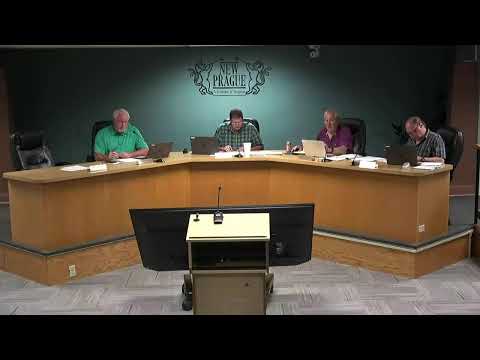
Developers with Yellow Tree introduced a proposal Sept. 9 to build roughly 155 apartments on nearly five acres near Ravenstream Elementary and asked the New Prague City Council for initial feedback on a request for tax abatement assistance to make the project financially feasible.
Mikayla Hewitt of Baker Tilly explained the tax‑abatement mechanism as a partial rebate of incremental taxes to improve project cash flow. She said the developer’s pro‑forma assumes a total development cost just under $40 million and an initial taxable value estimate in the range of about $34.8 million. Baker Tilly’s preliminary illustration showed the city’s full share at 100 percent would produce an estimated city‑share abatement of about $184,257 annually, short of the developer’s stated assistance target of roughly $300,000 a year.
“Tax abatement is really more of a tax rebate,” Mikayla Hewitt told the council while explaining scenarios that would include county and school participation.
Rob Lubenow, a Yellow Tree co‑founder, described the firm as a long‑standing multifamily developer that keeps assets long term and said market studies show demand in New Prague for more market‑rate rental units. “We primarily do multifamily projects ... we see a need for housing here,” Lubenow said.
Council members pressed developers and consultants on underwriting, long‑term ownership, rent levels and public costs. One councilmember noted concern that a 15‑year abatement could be used to finance early returns while risks — such as later sales to institutional buyers — might erode local influence on property upkeep. Developers and staff said those concerns are addressed through underwriting, lender requirements, the city’s rental inspection ordinance and provisions that can be written into development agreements.
Staff said next steps would include city staff refining the pro‑forma with the developer and initiating outreach to Scott County and the local school district to determine whether each taxing jurisdiction would participate in an abatement scenario. Councilmembers expressed general interest in continuing discussions but said more refined financial analysis and commitments from other taxing entities would be needed before a formal abatement agreement could be considered.
No formal action on abatement was taken; the item was introduced and the council directed staff to continue due diligence and outreach to the county and school district.