Get Full Government Meeting Transcripts, Videos, & Alerts Forever!
Get email alerts on the Tax Abatement topic
No spam. Unsubscribe anytime.
New Prague council approves 15‑year tax abatement for proposed 54‑unit Ebert apartments
Summary
The City Council approved a 15‑year, tiered property‑tax abatement for a proposed 54‑unit Ebert apartment building after a public hearing with mixed testimony. Staff said the abatement is a "but‑for" incentive intended to spur market‑rate housing; opponents warned it risks reduced developer commitments and future taxpayer costs.
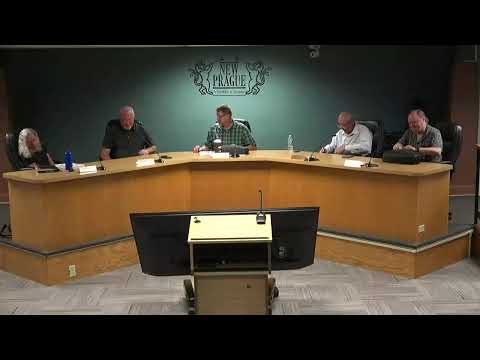
The New Prague City Council voted to approve a property‑tax abatement for a proposed 54‑unit apartment building by Ebert Construction after a public hearing Tuesday.
City Administrator Josh introduced the request on behalf of the developer, describing a 54‑unit market‑rate project on a roughly 1.6‑acre lot south of Walgreens with rents the developer estimates at $1,200–$1,800. Josh said the developer is requesting a 15‑year, step‑down abatement on incremental taxes (a higher abatement in the earliest years tapering to 33% in years 11–15) and estimated the total abatement at about $316,965. He framed the request as a "but‑for" incentive, saying the project would not proceed at market without the abatement and that it would bring new utility customers and permit/connection fees to the city.
The public hearing drew both supporters and critics. Supporters included small‑business owners and representatives of the New Prague Chamber: "Our businesses depend on accessible housing options for their employees," said Katie Boettcher of K Witt Construction and the Chamber board. Local business owners told the council that additional housing would help retain employees and attract customers.
Opponents questioned whether the developer had shifted or reduced its original funding requests and warned that the project might be financially viable without public incentives. Brian Paulson asked the council to "send a message to developers that this city is not interested in tax handouts," citing past changes in the developer's requests. Joel Wallen, who has analyzed projected revenues, argued rent increases over time could allow the project to pay its way without long‑term abatement.
Council discussion focused on financial safeguards and precedent. Staff and outside counsel clarified that state law allows abatements for many reasons and that the city had structured the request as a "but‑for" test. Mikaela Hewitt of Baker Tilly advised the council that, because multiple taxing entities were initially involved, a 15‑year maximum term applied under state rules. The developer's representative, Jake Bodinski, said the company planned to preserve building quality and to add equity rather than lower standards if costs changed.
After debate the council moved, seconded and approved the resolution authorizing the abatement; the vote carried by voice.
What happens next: the abatement agreement will be finalized in contract language and recorded in the city file. Staff said valuation and term details will be confirmed with the county assessor and the city attorney, and that the agreement allows participating taxing entities to opt out if they choose.
Why it matters: city officials said the abatement is intended to add market‑rate rental housing where none has been built in decades, support local employers who struggle to recruit workers, and bring additional fees and customers to city utilities. Opponents said the deal risks subsidizing investor returns and urged stronger contractual compliance and valuation verification.
The resolution as approved authorizes city staff to complete the abatement contract and related documents for the 54‑unit Ebert project.