Get Full Government Meeting Transcripts, Videos, & Alerts Forever!
Get email alerts on the Street Infrastructure topic
No spam. Unsubscribe anytime.
Wyoming council approves plans for street improvement after public hearing on property assessments
Summary
After a public hearing in which residents pressed the city about assessment costs, the Wyoming City Council authorized preparation of plans and specifications for a 2024 street‑improvement project and affirmed the city’s 20% assessment policy; estimates shown to residents put typical homeowner assessments near $6,100–$6,525.
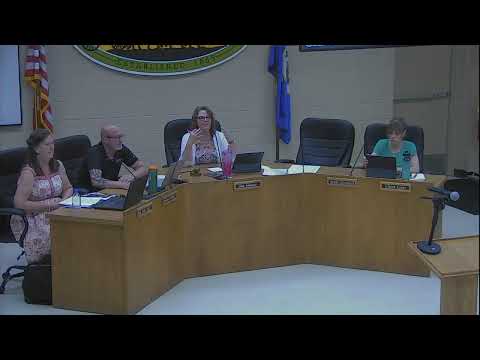
Wyoming, Minn. — The Wyoming City Council on June 4 authorized staff to prepare plans and specifications for a 2024 street‑improvement project after a public hearing in which nearby homeowners raised concerns about assessment amounts and the project’s effect on household budgets.
City engineer Mr. Erickson told the council the project includes reconstruction of several streets (including Goodwin and Grafton avenues) and will generally remove and replace pavement rather than perform mill‑and‑overlay work. The city’s policy is to assess 20 percent of surface and drainage improvements. For the two project areas shown to the council, Mr. Erickson presented estimated per‑unit assessment figures of about $6,106.18 in the rural area and $6,525.43 in the urban area, based on his cost calculations and unit counts for parcels.
Why this matters: The assessment approach assigns a portion of capital costs to property owners whose driveways access the reconstructed streets; the remainder is paid by the city and typically financed through bonding. That split and the dollar amounts prompted multiple residents to ask whether the city budget or reserves, or other funding sources, could reduce the charge to homeowners.
At the public hearing, Kristen Ortworth of Gramford Avenue said homeowners were surprised and frustrated to learn of the assessments. "It was a very unpleasant surprise," Ortworth said, asking whether the city had budgeted for the work and what other charges homeowners should expect. City staff responded that the project had moved up the city’s capital improvement plan because of pavement condition, that the city typically bonds for such work, and that assessments are paid over a 10‑year period. Staff noted property‑owner appeal rights under Minnesota Statute Chapter 429 and said owners who prepay within 30 days of certification may avoid interest.
Mr. Erickson said the streets were near the end of their service life and that the reconstruction should provide a useful life measured in decades if preserved with routine maintenance; he described the pavement design and said typical construction would meet MnDOT compaction and material standards. He also described an ongoing discussion with the Comfort Lake Forest Lake Watershed District about potential water‑quality enhancements funded by the watershed district, should they opt to participate.
Council members asked about roadway width (engineer: generally 24 feet for rural sections and 28 feet for urban sections), the difference between concrete curb and bituminous curb options, and the expected useful life of the new construction. Mr. Erickson said concrete curb is more durable and provides better grade control for drainage but may increase assessments modestly. He gave a prior interest example of 5.25 percent used last year for similar financing and confirmed assessments would be applied over a 10‑year schedule unless prepaid.
Action taken: Member Schilling moved to approve the resolution ordering the project and authorizing preparation of plans and specifications; the motion was seconded by Member Luker and carried on a voice vote.
Next steps: With plans authorized, staff will finalize plans and specifications, advertise for bids and return to council with contract and bid information. If the council proceeds after bidding, construction was described as likely in July–August timeframe. Property owners will receive formal assessment notices and the city will schedule an assessment hearing this fall; written objections must be filed in accordance with the statutory process.