Get Full Government Meeting Transcripts, Videos, & Alerts Forever!
Get email alerts on the Agricultural Exemption topic
No spam. Unsubscribe anytime.
Yavapai County staff propose agricultural‑exemption text changes to align with state law
Summary
Planners proposed a text amendment to clarify the county agricultural exemption, allow incidental agricultural uses, and decouple timing of assessor tax status from planning exemptions. The county assessor emphasized that planning exemptions are distinct from tax valuation.
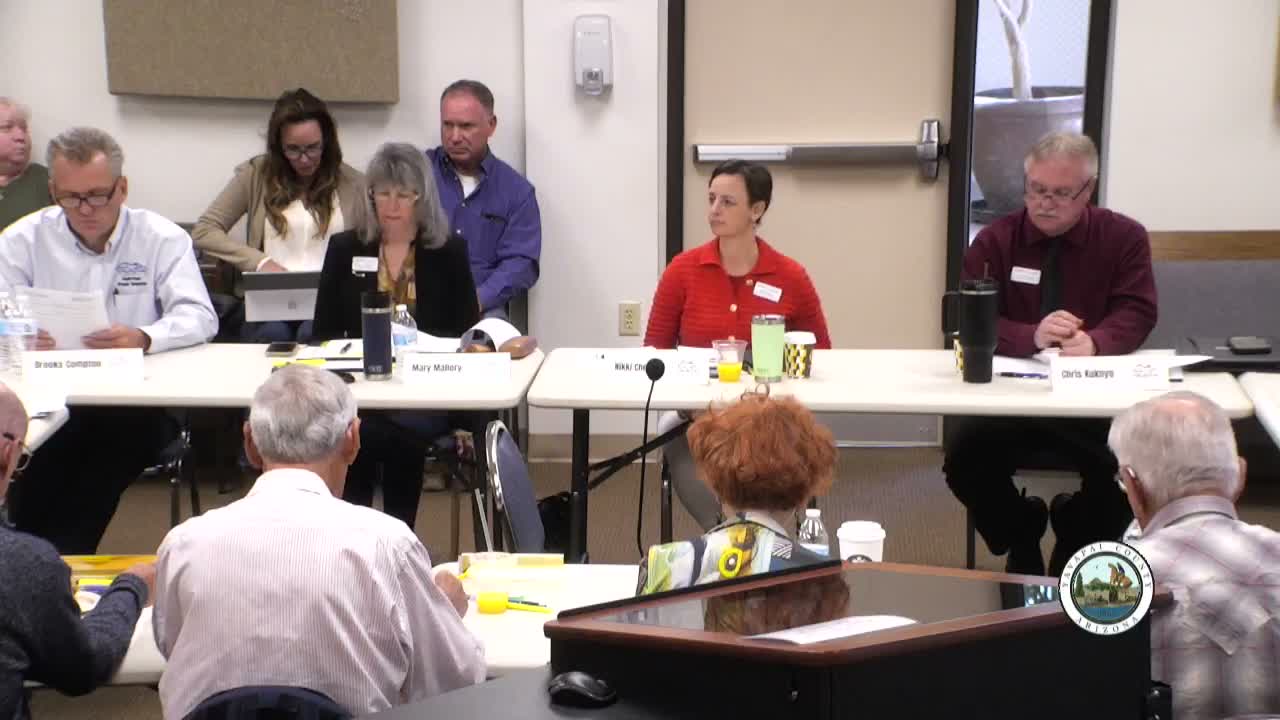
COTTONWOOD, Ariz. — County planning staff on March 27 presented a proposed text amendment to Yavapai County’s code to align the county’s agricultural exemption language with Arizona statute and to clarify what is regulated by development services versus the assessor’s office.
Planner BJ Ratliff told supervisors that two primary issues prompted the change: the county ordinance’s current requirement that the property be used “primarily” for agriculture, which is not in full alignment with the state’s criteria, and a local sequencing requirement that forced applicants to obtain assessor agricultural tax status before seeking a planning exemption. “We’ve kind of discovered we have a couple of things that are not in good alignment with the state,” Ratliff said, describing proposed edits to allow incidental agricultural uses and to permit the assessor and planning processes to proceed concurrently when appropriate.
Assessor Judd Simmons joined the conversation by video and clarified a frequent point of confusion: planning‑related agricultural exemptions — which can exempt certain structures used for agricultural purposes from planning regulation — are separate from the assessor’s determination of an agricultural valuation for tax purposes. “That would be true if you qualify for the AG exemption and to clarify this is not, this is not exempted from taxes,” Simmons said, explaining that the assessor follows a more stringent statutory test tied to primary agricultural use for tax valuation.
Why it matters: The change is aimed at preventing procedural deadlocks where applicants must complete assessor filings before planning can consider a regulatory exemption. Staff and board members also cautioned that the county needs precise definitions to avoid unintended loopholes (for example, outbuildings or sheds being treated as agricultural structures without appropriate standards).
Supervisors and staff asked for clear, narrowly tailored language around incidental agriculture, acreage thresholds for specific uses (vines, vineyards), whether equine operations qualify, and whether floodplain or other regulations remain applicable even when an agricultural exemption is granted. County attorneys and the assessor’s office will continue to refine the language before the ordinance proceeds to the Planning & Zoning Commission and then to the Board of Supervisors for formal hearings.
Next steps: Staff asked the board for direction to initiate the text amendment and continue drafting with counsel; no final ordinance was adopted at the session.