Get Full Government Meeting Transcripts, Videos, & Alerts Forever!
Get email alerts on the Zoning Ordinance Update topic
No spam. Unsubscribe anytime.
Yavapai County hires consultant, launches multi‑year zoning ordinance rewrite
Summary
Yavapai County officials on March 27 opened a multi‑year project to rewrite the county zoning ordinance, subdivision regulations and zoning map. Consultant Logan Simpson will lead a public engagement process and housing needs assessment, with staff saying targeted ordinance amendments may proceed during the project.
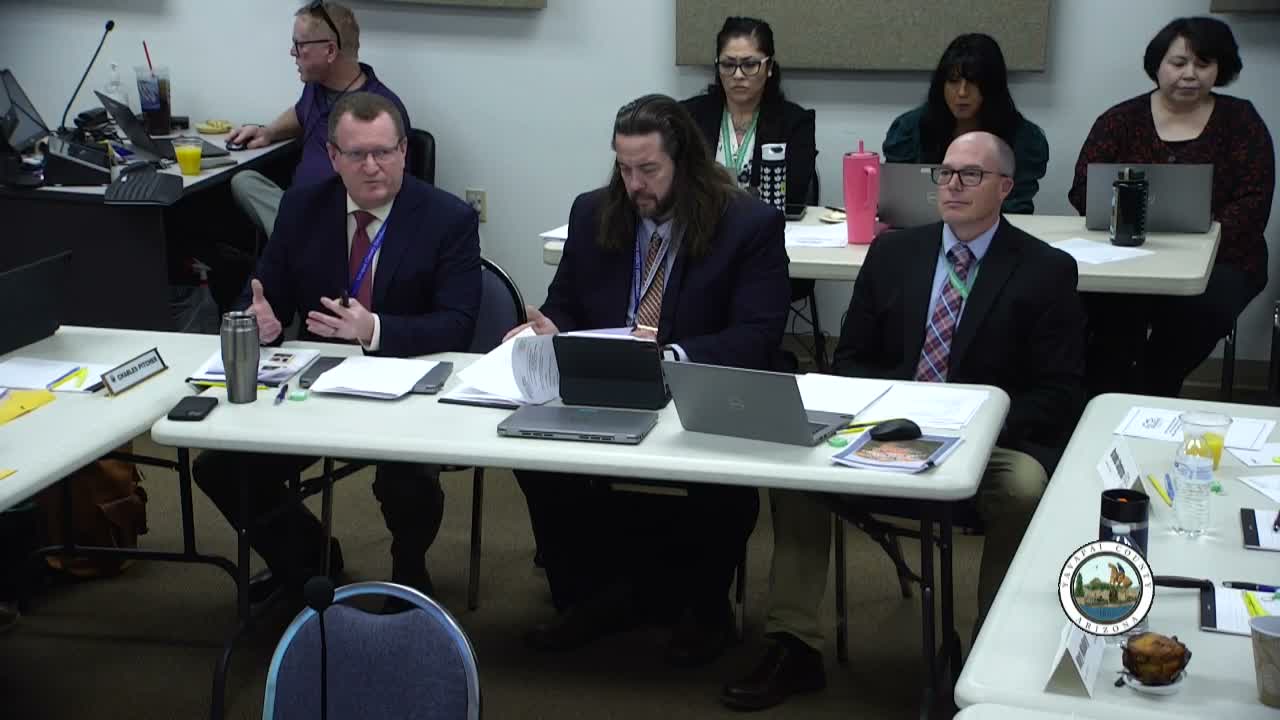
YAVAPAI COUNTY — The Board of Supervisors and Planning & Zoning Commission on March 27 began a comprehensive effort to rewrite the county’s zoning ordinance, subdivision regulations and zoning map, naming Logan Simpson as the principal consultant for a project staff estimates will run into late 2027.
The consultant introduction and project scope were presented by planning manager Matt Blake and consultant Roger Eastman, who told supervisors the rewrite aims to make the code user friendly, balance predictability with flexibility, implement the county comprehensive plan and address longstanding issues such as lot splitting, clustering and the need for a broader mix of housing types.
Eastman said the project will pair a housing needs assessment and market analysis with a code assessment and a sustained public engagement campaign. “From discovery comes innovation,” Eastman said, describing a schedule that places the housing needs assessment and the code assessment as key deliverables by September. He added the team will use online platforms, stakeholder interviews, town halls and small‑group meetings to reach a wide cross section of county residents and industry stakeholders.
Why it matters: County staff said the current ordinance dates to the 1960s with many incremental changes and is now difficult to use, creating uncertainty for residents and applicants. A comprehensive update is intended to clarify what uses are permitted where, streamline permitting, and give supervisors more predictable tools to guide growth and conserve open space.
Key project elements announced include: a housing needs assessment and market analysis to ground policy in local economics; a code assessment report; a new table of contents and style guide for the ordinance; and a public participation strategy that will include online tools (Public Input, Alchemer, Menti), pop‑up events and workshops. Eastman said the team will coordinate with county staff and legal counsel and recommended early stakeholder meetings with contractors, environmental groups, other municipalities and design professionals.
Supervisors asked whether parts of the code could be updated and implemented before the multi‑year project concludes. Staff said targeted, prioritized ordinance amendments (for example, the dark‑sky ordinance or public‑safety adjacency standards) can move through the regular amendment process while the larger rewrite proceeds.
Next steps: Staff and the consultant will finalize the public outreach strategy and schedule stakeholder interviews; the housing needs assessment and code assessment are expected in the fall, and drafts will be subject to planning commission and board review before final adoption.