Get Full Government Meeting Transcripts, Videos, & Alerts Forever!
Get email alerts on the Housing Land Bank topic
No spam. Unsubscribe anytime.
Neighborhood Housing Services urges Dimmit County to form land bank, pursue CDBG grants for affordable housing
Summary
Neighborhood Housing Services of Dimmit County presented a plan to create a land bank to acquire tax-delinquent and vacant properties and use Community Development Block Grant (CDBG) funding and other supports to develop affordable rentals, workforce development and neighborhood revitalization.
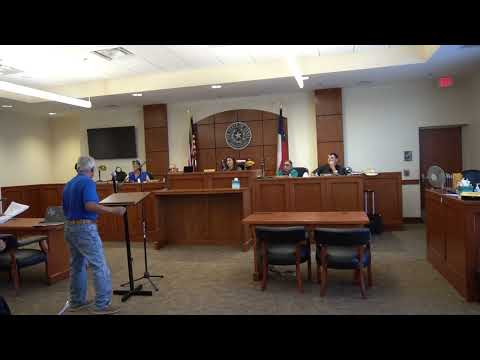
Michael Coates, identified himself as grants compliance officer for Neighborhood Housing Services of Dimmit County, presented a proposal to establish a local land bank and to pursue Community Development Block Grant funds to support affordable housing and community revitalization. "Right now, we have about 33.3% of households are considered cost burdened," Coates said, citing a county median income near $27,374.
Coates described a land bank as "a public or non-profit organization created to acquire, manage, and repurpose vacant, abandoned, and tax delinquent properties," and said its key benefits would include returning underused properties to productive use to boost the local tax base while creating affordable rental housing and workforce-development opportunities. He read counts of tax-delinquent properties from a recent list: Ashford (15), Big Wells (19), Carrizo Springs (58) and Catarina (2). He estimated the county missed roughly $105,000 in property tax revenue over a five-year period, based on the list he provided.
On financing, Coates said the CDBG application process was open and described two relevant funding streams: a block grant he said was $750,000 and a construction-related fund he described as about $1,000,000. He asked the court to consider in-kind donations of vacant or tax-delinquent parcels, low-interest or deferred loans to accelerate rehabilitation, fee reductions and expedited permitting, and shared planning and data support. He also said initial CDBG registration should be completed by December 9 and that Neighborhood Housing Services would provide additional information and materials.
During follow-up questions, commissioners and members of the public asked whether participating in a land-bank program could jeopardize benefits for residents who enter nursing homes and transfer property. Coates said program design choices—such as converting acquired properties to rental units and setting payment schedules—could preserve residents' eligibility "if we do this correctly." He emphasized the intent was not to generate profit but to return homes to occupancy and provide low-income rent.
The presentation concluded with no formal court action recorded. Coates said Neighborhood Housing Services would draft land-bank bylaws and policies consistent with the Urban Land Bank program referenced in his materials and would provide detailed grant application support if the court chose to pursue the CDBG opportunity.
Next steps: the presentation will remain a matter for future discussion; the court did not take a formal vote to create a land bank or commit matching funds during the hearing.