Get Full Government Meeting Transcripts, Videos, & Alerts Forever!
Get email alerts on the Environment Permits topic
No spam. Unsubscribe anytime.
Rowlett tightens rules for temporary batching plants, raises review fees
Summary
Council approved an ordinance raising the buffer distances that trigger council review of temporary batching plants, added application requirements for dust and stormwater controls, and adopted a graduated fee schedule for permits to reflect increased review and noticing.
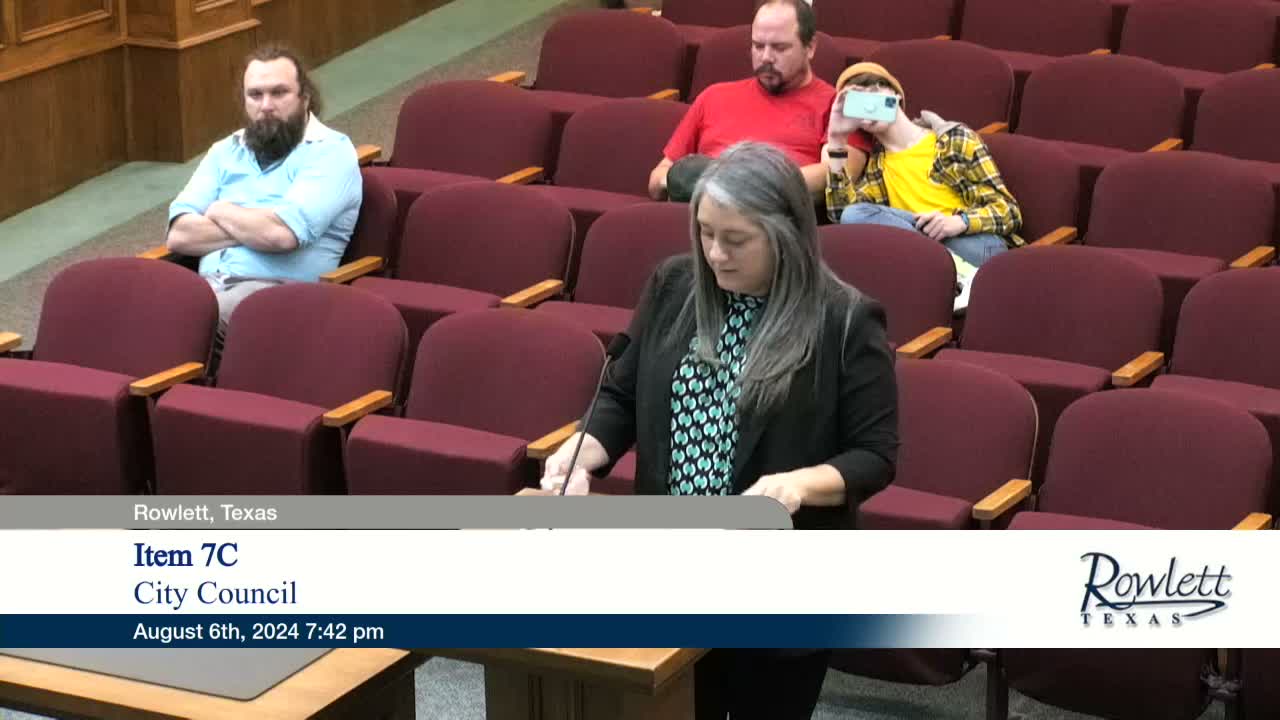
City staff presented an update to Rowlett’s temporary batching-plant ordinance on Aug. 6 that changes how and when these short-term operations are reviewed and approved.
Corey (city staff) said the existing ordinance allowed staff approval for plants located more than 300 feet from any occupied residence. The proposed ordinance raises the staff-approval threshold to projects located more than 2,000 feet from residences. Plants located between 500 and 2,000 feet would be reviewed publicly by council after staff review; plants proposed under 500 feet would be denied by staff per the ordinance but could be appealed to council to preserve discretionary authority in unusual cases.
Staff said the application process will require stronger dust-mitigation and stormwater pollution-prevention practices as part of initial review, not only for sites over 1 acre. The ordinance also includes a companion fee-schedule amendment: staff-approved permits would remain $350; council-reviewed permits between 500 and 2,000 feet would be $1,000 to offset noticing and staff time; permits appealed or processed under 500 feet would carry a higher fee commensurate with the additional outreach and review.
Council discussed extension authority (staff or council grants extensions consistent with who approved the original permit) and the practical effects of the buffer changes. Supporters said the change gives the council more ability to hear neighborhood concerns and reduce unreviewed operations. The ordinance passed by a recorded vote of 6–0 with 1 absence, and the fee-schedule resolution passed by the same margin.
Why it matters: Temporary batching plants can generate dust, traffic and stormwater concerns for nearby residents; the ordinance increases buffer distances and public-review opportunities and adds application-level environmental protections.
Next steps: Staff will implement the new application requirements and the revised fee schedule; applicants should anticipate additional noticing and possible council hearings for sites within 2,000 feet of residences.