Get Full Government Meeting Transcripts, Videos, & Alerts Forever!
Get email alerts on the Capital Infrastructure topic
No spam. Unsubscribe anytime.
Rowlett staff lays out multi‑year CIP, asks council to rank projects and hold others
Summary
City staff presented a five‑year capital improvement program Sept. 9 and asked the Rowlett City Council to rank projects to continue, put others on hold, and prioritize funds for public safety, sewer, water and downtown infrastructure. Staff highlighted funding gaps and project phasing but recorded no formal roll‑call votes.
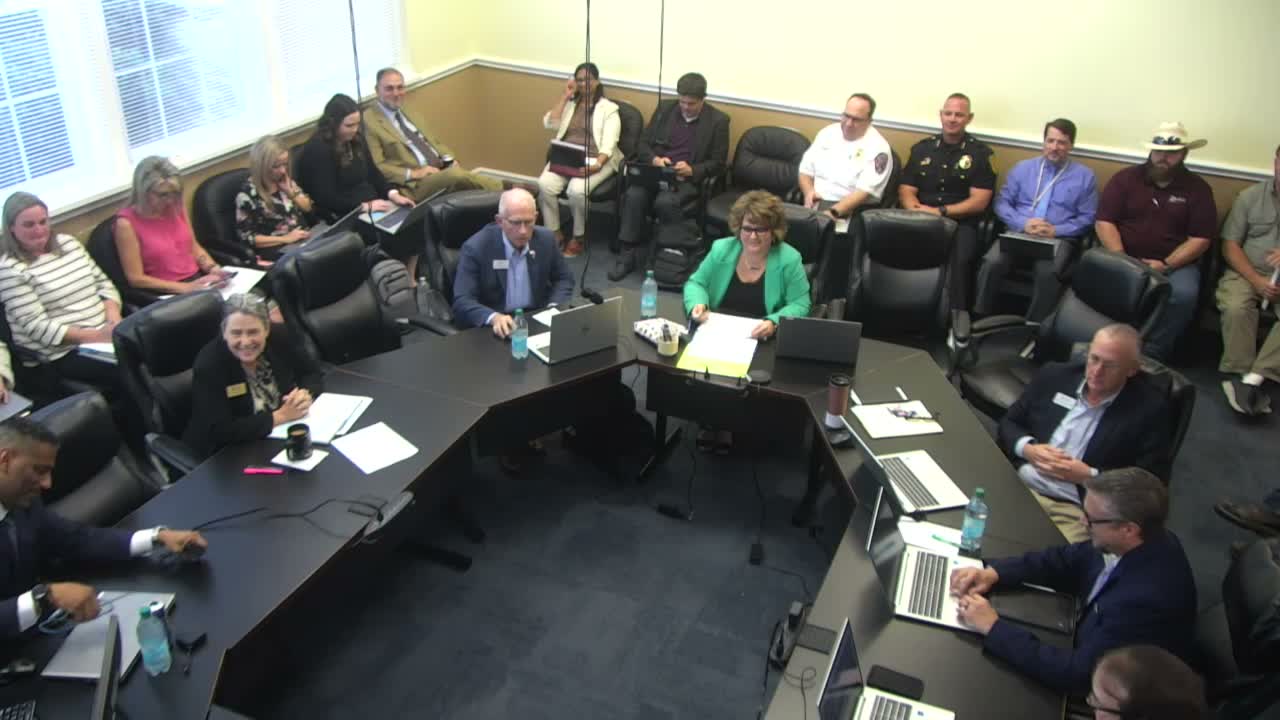
Rowlett City staff presented a detailed capital improvement plan at the City Hall conference room meeting on Sept. 9, asking the council to rank continuing projects and identify items to hold for later years. The presentation covered parks, drainage, sewer and water projects, and several road and signal improvements that staff said require additional coordination with state and regional partners.
Staff presenter (Speaker 2) told the council that the stormwater master plan update is anticipated in FY26 and that park trail work—including the substantially complete Garner Fuqua Trail—should finish by the end of the year. On public-safety infrastructure, staff said the Sapphire Bay Public Safety Facility had a stop‑work order that has been lifted, is currently on budget and is expected to be complete in September 2025.
On sewer projects, Speaker 2 described the State Highway 66 East Reconstruction and a Force Main evaluation that will require multiple easements. "Part of the project is going to require 19 easements," Speaker 2 said, noting the corridor is congested and easement costs could be substantial. Staff also detailed the College Park lift station abandonment, a gravity conversion project reported as about 90% designed but carrying an estimated funding shortfall "by almost $2,000,000," according to Speaker 2.
Staff recommended placing several projects on hold because funding is scheduled in out years or because a broader constructability review is needed. Examples included the drainage manual (which staff said should be bundled with other criteria manuals), a thoroughfare plan update (deferred because impact fees and alignments are under review), and large development‑driven off‑site waterlines tied to Sapphire Bay capacity. On the Toller Business Park project, staff said constructability and single‑access issues warranted pausing Phase 2 for reexamination.
Council members questioned timing and budget assumptions. Speaker 1 asked whether contingency and recent voter‑approved bond allocations had been included in estimates; Speaker 2 replied that the figures reflected preliminary construction estimates and that contingency percentages typically decline as design advances. "It's going to be very difficult to get to a very close number" until projects are bid, Speaker 2 said.
The council performed a ranking exercise for capital projects; staff circulated ranking sheets and prepared to reconcile the council’s choices. Transcript notation indicates staff reported receiving "2 to move to continue" on some items, but the exchange did not include a formal motion text, mover/second or recorded vote count in the transcript.
The presentation closed with staff promising follow‑up: a more refined phasing plan for sewer and water projects, continued coordination with TxDOT and DART on transportation items, and additional resident outreach on construction impacts where necessary. The council moved next into maintenance‑program discussion and ranking. The meeting record does not show a formal ordinance, resolution or roll‑call vote taken on the CIP during this session.