Get Full Government Meeting Transcripts, Videos, & Alerts Forever!
Get email alerts on the Park Enforcement topic
No spam. Unsubscribe anytime.
Rowlett council orders park enforcement, signage and improvement plan after residents flag Camp Miller safety problems
Summary
After residents described nights of loud parties, illegal campfires, threats and gunfire at the Miller Road lakeshore area, council learned the shoreline is designated city parkland and directed staff to post park rules, begin enforcement, provide temporary services and return with a funded park improvement plan.
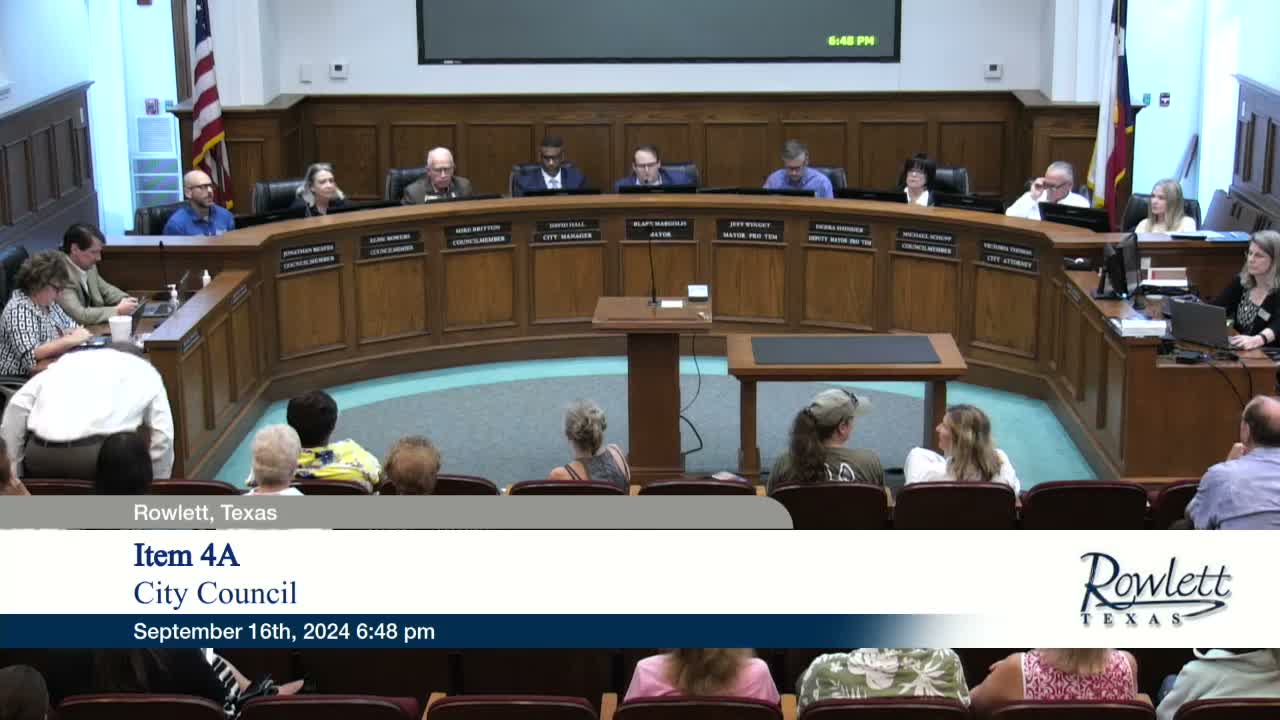
Rowlett City Council on Sept. 16 moved quickly to tighten controls at the Miller Road / Muddy Creek lakeshore area — the neighborhood residents call “Camp Miller” — after a wave of public comment describing late‑night parties, illegal campfires, vandalism and online threats.
Deputy Mayor Pro Tem Schinder opened the discussion by summarizing complaints from neighbors and showing photos and audio measurements. “We have gunfire, fires and public intoxication,” Schinder said in her presentation, and she displayed a backyard noise measurement of 85.5 decibels to illustrate the impact on adjacent homes. Residents recounted repeated incursions onto private docks, thefts, and a Facebook group that posted identifying photos and threats against homeowners.
City Manager Christophe Bauer told the council staff had reviewed the city code and an older ordinance and concluded the greenbelt along Lake Ray Hubbard has been designated parkland since 1982. That legal finding “changes the dynamic” of how the city can respond, staff said, because park rules and park‑hours enforcement are now applicable.
Police Chief Denning provided department statistics and enforcement context, saying staffers searched CAD records and, after filtering, found 21 calls tied directly to the Miller/Muddy Creek parking area over the past three years and five calls year‑to‑date in 2024. “Treating the area as a park gives officers additional enforcement tools — after‑hours presence gives probable cause for contact,” Denning said.
Council members debated immediate closure, temporary gating and a phased improvement plan. Rather than adopting an immediate permanent closure, the council directed staff to take near‑term operational steps: install park signage and posted hours (staff said signage could be installed in days), begin consistent enforcement of existing park ordinances, add more frequent trash pickup, consider a porta‑potty to reduce public defecation, explore rotating PTZ camera coverage and assign an official name/address so 911 calls can be located reliably. Staff was asked to return in the coming months with a park improvement plan and cost estimates for longer‑term measures such as formal parking, rip‑rap along the shoreline, fencing or a landscaped pollinator buffer.
Residents who addressed the council, including business owners and long‑time homeowners, stressed urgency. “It’s not if, but when” a tragedy occurs, one speaker said, urging fast action to reduce drowning and gunfire risks. Council members flagged the need to protect complainants from retaliation and asked staff to consider protocols for anonymity and caller identification when appropriate.
Next steps from the meeting record: staff will post park hours and rules, begin enhanced cleanup and park‑style enforcement, evaluate short‑term sanitary and safety measures, and return to council with a phased improvement plan and any funding requests for longer‑term capital work.