Get Full Government Meeting Transcripts, Videos, & Alerts Forever!
Get email alerts on the Transportation Signage topic
No spam. Unsubscribe anytime.
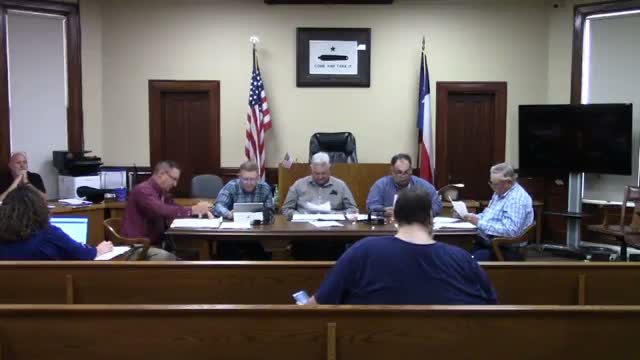
Commissioners approve Belmont engine-brake signage but note county cannot enforce on state roads
Summary
The court approved a draft resolution and signage for Belmont to discourage engine braking, but multiple commissioners and staff said enforcement on state-maintained roads would require state action or an incorporated municipality with ordinance authority; the approval noted enforcement limits.
County staff presented a draft resolution and sign language intended to discourage or prohibit engine braking in the Belmont area. The court approved the resolution language and authorized signs, but the discussion focused on enforceability.
Staff (Kristen) told commissioners that while TxDOT had approved the sign language, the county lacks policing authority to impose fines or otherwise enforce engine-brake restrictions on state roads. Commissioners repeatedly emphasized that enforcement would require state action (TxDOT or state statute) or that a municipality with ordinance power (if Belmont were incorporated) pass a local law and provide policing authority.
Several commissioners expressed concern about liability and the logic of purchasing or erecting signs the county could not enforce. One commissioner observed that a nearby county had installed an unofficial sign that was not legally enforceable. The court recorded agreement that signs could be posted on county-maintained roads where the county has jurisdiction, but not on FM or state rights-of-way unless the state undertakes posted enforcement.
The court approved the item while explicitly noting the limits on enforcement and requested staff to continue coordinating with TxDOT and other stakeholders to clarify installation and enforcement responsibilities.
Next steps: staff will coordinate with TxDOT on sign placement and clarify whether further state action is necessary to make the restriction enforceable. The court's approval pertains to signage/resolution language; it does not create new county policing powers.