Get Full Government Meeting Transcripts, Videos, & Alerts Forever!
Get email alerts on the Public Safety Technology topic
No spam. Unsubscribe anytime.
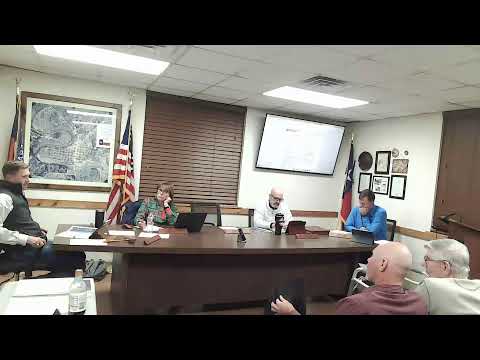
Bandera council hears presentation on license-plate reader cameras; staff and deputies describe investigative uses and costs
Summary
Flock Safety representatives and a Department of Public Safety sergeant described a preliminary license-plate-reader pilot (about four cameras to start), camera hardware costs (~$12,000 each) and subscription/service costs (~$3,000 per camera per year), and emphasized rear-plate imaging only (no facial recognition).
Flock Safety representatives presented a proposal to the Bandera City Council for a license-plate reader (LPR) camera program aimed at supporting local law enforcement. Hayden Webb (Flock Safety) outlined a preliminary deployment of about four cameras focusing on downtown and primary entry points, with the potential to add sites including school entry/exit points.
Eric Morgan, area highway patrol sergeant with the Texas Department of Public Safety, described investigative situations where LPR technology could have aided recent cases, including a hit-and-run investigation and a smuggling incident in which license-plate readers might have provided useful leads. Morgan said LPR coverage along known travel routes could provide an additional investigative tool.
Technical and cost details discussed: cameras are typically mounted 20–25 feet off the road, solar powered and cellular, and configured to photograph rear license plates only to avoid facial-recognition captures. Webb and staff cited a hardware figure of roughly $12,000 per camera and a service/subscription cost of about $3,000 per camera per year; they said Flock coordinates with local marshal’s offices and can use existing poles or provide mounting hardware as needed.
Council members asked about vandalism (presenters said incidents are uncommon and replacements are provided), directional coverage, and potential collaboration with schools and the local independent school district. Staff noted permission would be needed from pole owners (BEC referenced) and that using existing infrastructure could reduce installation work.
No formal action was taken on the presentation; councilmembers signaled interest in further study and possible budgeting if the program proceeds to a future agenda item.